introduction
When engineers first encounter Monel K-500, the immediate question is almost always the same: “If both alloys are 65% nickel and 30% copper, what justifies paying 30–40% more for K-500?” It is a fair question — the chemical compositions look nearly identical, and both alloys share the same excellent seawater and hydrofluoric acid resistance that has made the Monel family the default choice for marine and chemical service for nearly a century.
But Monel K-500 is not just a more expensive version of Monel 400. It is a deliberately engineered precipitation-hardening alloy that adds 2.3–3.15% aluminum and 0.3–1.0% titanium to the Ni-Cu base. Those two additions, combined with a carefully controlled age-hardening heat treatment, form a sub-microscopic gamma-prime (γ′) precipitate that more than triples the yield strength of the alloy without sacrificing the corrosion resistance of the base composition.
The result is an alloy that fills a specific engineering niche: applications where Monel 400’s corrosion resistance is required but where its relatively low strength would force the use of a thicker, heavier, or more expensive alternative. Pump shafts, valve stems, oilfield tooling, springs, and cryogenic hardware all live in this regime.
This article provides a complete engineering comparison to help you decide when the upgrade from 400 to K-500 is justified — and when it is not.
Composition: The Aluminum and Titanium Difference
Both alloys share the Ni-Cu base that defines the Monel family. The compositional differences look small on paper but produce dramatic property changes.
| Element | Monel 400 (UNS N04400) | Monel K-500 (UNS N05500) |
|---|---|---|
| Nickel (Ni) | ≥63.0% | ≥63.0% |
| Copper (Cu) | 28.0–34.0% | 27.0–33.0% |
| Aluminum (Al) | — | 2.30–3.15% |
| Titanium (Ti) | — | 0.35–0.85% |
| Iron (Fe) | ≤2.50% | ≤2.00% |
| Manganese (Mn) | ≤2.00% | ≤1.50% |
| Carbon (C) | ≤0.30% | ≤0.25% |
| Sulfur (S) | ≤0.024% | ≤0.010% |
Two elements define the difference:
1. Aluminum (2.30–3.15%). Aluminum is the primary age-hardening element. During the precipitation heat treatment (typically 540–620°C for 4–16 hours), aluminum combines with nickel to form Ni₃Al — the gamma-prime (γ′) intermetallic phase. These sub-micron precipitates form coherently within the nickel matrix and impede dislocation motion, producing a dramatic strength increase.
2. Titanium (0.35–0.85%). Titanium partially substitutes for aluminum in the γ′ precipitate, forming Ni₃(Al,Ti). Titanium improves precipitate stability at temperature, slows overaging, and increases the peak hardness achievable during aging.
The remaining Ni-Cu matrix (~63% Ni, ~30% Cu) is functionally identical to Monel 400, which is why K-500 retains 400’s general corrosion behavior. The copper content provides resistance to reducing acids (HF, HCl dilute) and neutral chloride solutions; the high nickel content provides resistance to stress corrosion cracking and alkali environments.
The Metallurgy of Age Hardening in K-500
Understanding the precipitation sequence is essential for engineers specifying K-500, because heat treatment directly controls whether the alloy reaches its design strength.
Solution Annealing (Pre-Aging)
Before aging, K-500 is typically supplied in the solution-annealed condition:
- Temperature: 980–1010°C (1800–1850°F)
- Time: 1–2 hours depending on section size
- Cooling: Water quench
- Purpose: Dissolve all aluminum and titanium into the matrix, eliminate any γ′ that may have formed during slow cooling from prior processing, and produce a uniform face-centered-cubic (FCC) solid solution
In the solution-annealed condition, K-500 has mechanical properties similar to annealed Monel 400 — the age-hardening potential is dormant.
Precipitation (Aging) Treatment
The age-hardening cycle transforms K-500 from a soft solid solution into a high-strength precipitation-hardened alloy:
- Temperature: 540–620°C (1000–1150°F)
- Time: 4–16 hours, depending on section size and desired strength
- Cooling: Furnace cool to below 480°C, then air cool
- Mechanism: Ni₃(Al,Ti) γ′ precipitates nucleate homogeneously within the matrix, growing from coherent sub-nanometer clusters to ~5–10 nm spherical particles at peak aging
Critical point: Over-aging (excessive time or temperature) causes γ′ to coarsen, losing coherency with the matrix and reducing strength. Under-aging produces insufficient precipitate density. Both errors compromise the design strength.
Effect of Section Size
Large-diameter K-500 bar (above ~75 mm / 3 inches) presents a challenge: the center of the section may not cool fast enough during quench to fully retain aluminum in solution, resulting in incomplete aging response at the core. For this reason, K-500 is most commonly specified in smaller sections (≤75 mm) where uniform properties can be guaranteed. For larger sections, age-hardenable stainless steels (such as 17-4PH, see Article 19) or nickel alloys such as Inconel 718 may be preferred.
Mechanical Properties: 3× Strength, Same Toughness
The most dramatic difference between Monel 400 and K-500 lies in mechanical properties — particularly yield strength.
| Property | Monel 400 (Annealed) | Monel K-500 (Aged) | Multiplier |
|---|---|---|---|
| Tensile Strength (UTS) | 550–620 MPa | 965–1100 MPa | ~1.8× |
| Yield Strength (0.2% PS) | 195–275 MPa | 690–760 MPa | ~3.0× |
| Elongation (%) | 35–45% | 20–30% | Lower |
| Hardness | 110–140 HB | 250–320 HB | ~2.2× |
| Impact Toughness (Charpy V) | 150–250 J at −196°C | 60–120 J at −196°C | Lower |
| Fatigue Strength (10⁸ cycles) | ~240 MPa | ~415 MPa | ~1.7× |
Why This Matters in Design
The yield strength advantage of K-500 is the single most important reason to specify it. Consider a pump shaft transmitting torque in seawater service:
- For a given torque load, the shaft diameter is proportional to (yield strength)^(1/3)
- Upgrading from Monel 400 (yield ~240 MPa) to K-500 (yield ~720 MPa) reduces the required shaft diameter by a factor of (240/720)^(1/3) ≈ 0.69
- A 100 mm Monel 400 shaft can be replaced by a 69 mm K-500 shaft carrying the same torque
- Smaller diameter means smaller bearings, smaller seals, smaller pump casing — system-level cost and weight savings that often exceed the per-kg premium of K-500
This is why Monel K-500 has been the dominant choice for centrifugal pump shafts in marine service, refinery sour water service, and chemical process pumps for over 60 years.
Toughness Trade-Off
K-500’s elongation is roughly half of Monel 400’s, and Charpy impact values are also lower. However, both alloys remain face-centered-cubic (FCC) and do not exhibit a ductile-to-brittle transition — meaning both alloys retain useful toughness to cryogenic temperatures (-196°C and below). K-500 is therefore a valid choice for cryogenic valves, shafts, and fasteners where yield strength must be combined with low-temperature ductility.
Corrosion Resistance: A Near-Tie
Because the Ni-Cu base matrix is essentially identical between the two alloys, general corrosion resistance is similar across most environments. There are, however, subtle differences worth noting.
Seawater and Marine Environments
Both alloys provide excellent resistance to flowing seawater, with low pitting and crevice corrosion rates. K-500’s higher hardness gives it slightly better resistance to erosion-corrosion in high-velocity seawater (e.g., pump impellers, valve seats) where Monel 400 may suffer metal loss from turbulent flow.
Hydrofluoric Acid (HF)
Monel 400 has been the historical industry standard for HF alkylation units (see Article 26 for the 400 vs C-276 comparison). K-500 provides equivalent HF resistance and is specified where higher mechanical loading is present — for example, HF service valve stems where 400 would yield under high actuation torque.
Caveat: K-500 is more susceptible to stress corrosion cracking (SCC) in HF service than Monel 400. In concentrated HF with tensile stress, K-500 should be specified with caution; Monel 400 remains the safer choice for stressed components in hot concentrated HF.
Sulfuric Acid (H₂SO₄)
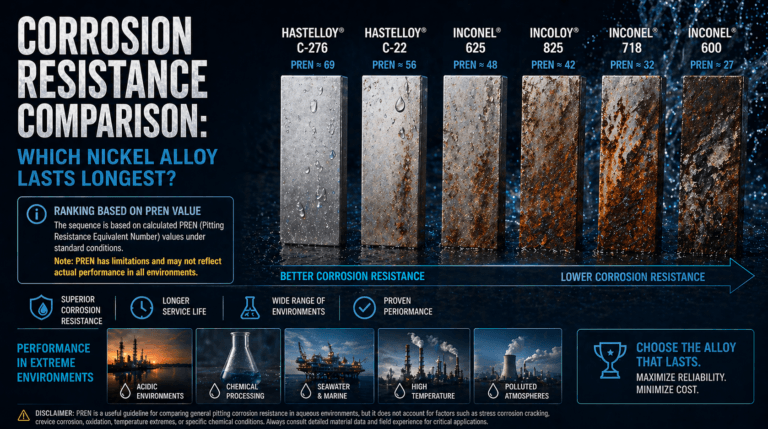
Both alloys resist dilute H₂SO₄ at ambient temperature. Performance diverges above 60°C or above 50% concentration, where both alloys become marginal. For these conditions, the upgrade path is to a nickel-chromium-molybdenum alloy such as Hastelloy C-276 (see Article 28) rather than K-500.
Hydrogen Sulfide (H₂S) and Sour Service
This is where K-500 has historically carved out a critical niche. Monel K-500 is NACE MR0175 / ISO 15156 qualified for sour oil and gas service in the age-hardened condition, provided hardness does not exceed HRC 35 (approximately 327 HB).
K-500 is widely used for:
- Oilfield tubing hangers
- Valve stems in sour service
- Downhole tooling components
- Springs and fasteners requiring high strength in H₂S environments
Monel 400 is also NACE-qualified for sour service but its lower strength limits its use in torque-bearing or pressure-bearing downhole roles.
Galvanic Considerations
Both alloys are nobler than steel in the galvanic series. When coupled to carbon steel or aluminum in seawater, both Monel 400 and K-500 will act as cathodes, accelerating corrosion of the less noble metal. The galvanic potential is essentially identical between the two Monel grades.
Physical Properties
| Property | Monel 400 | Monel K-500 |
|---|---|---|
| Density | 8.80 g/cm³ | 8.44 g/cm³ |
| Melting Range | 1300–1350°C | 1315–1350°C |
| Electrical Resistivity | 0.51 μΩ·m | 0.61 μΩ·m |
| Thermal Conductivity (20°C) | 21.8 W/m·K | 17.8 W/m·K |
| Coefficient of Thermal Expansion (20–100°C) | 13.9 μm/m·°C | 13.0 μm/m·°C |
| Magnetic Permeability | 1.001 (non-magnetic) | 1.001 (non-magnetic in annealed); up to 1.01 in aged |
Note on magnetism: K-500 can become slightly magnetic in the aged condition due to precipitate formation, while Monel 400 is essentially non-magnetic. For most applications this is not significant, but in instrumentation or MRI-adjacent applications, Monel 400’s guaranteed non-magnetic behavior is preferred.
Weldability and Fabrication
Monel 400 Welding
- Filler metal: ERNiCu-7 (matching composition)
- Weldability: Excellent — 400 is one of the easiest nickel alloys to weld
- Preheat: Not required
- PWHT: Usually not required
- Sensitization: Not applicable (no chromium carbide precipitation concern in Ni-Cu alloys)
- Dissimilar welding: Commonly welded to carbon steel, copper alloys, and other nickel alloys
Monel K-500 Welding
K-500 is significantly more difficult to weld than 400:
- Filler metal: ERNiCu-7 or matching composition K-500 filler (less common)
- Cracking risk: Strain-age cracking is the primary concern — the aging reaction can occur in the heat-affected zone (HAZ) under residual weld stress, causing delayed cracking
- Recommended practice: Weld in the solution-annealed condition, then re-solution anneal (980°C) followed by aging
- Practical reality: Most K-500 components are machined from bar stock rather than fabricated by welding. Where welding is required, ERNiCu-7 (Monel 400 filler) is typically used with the understanding that the weld deposit will be lower-strength than the parent K-500 material
- Repair welding: Generally not recommended for aged K-500 components
Practical guidance: If your design requires extensive welding, Monel 400 is the better choice. If your design requires the strength of K-500, design to minimize or eliminate welding — use machined bar stock for shafts, stems, and fasteners.
Machinability
Both alloys are classified as “difficult to machine” by virtue of their high work-hardening rate and gummy chip behavior:
- Monel 400: Machines like other austenitic nickel alloys; sharp tools, slow speeds, generous feeds, sulfonated cutting oils
- Monel K-500 (aged): Easier to machine than 400 due to higher hardness and reduced galling tendency; tool life typically 1.5–2× better than 400
- Monel K-500 (annealed): Very difficult to machine due to extreme galling and chip welding; always machine in the aged condition when possible
Standards and Specifications
Monel 400 (UNS N04400)
| Form | Standard |
|---|---|
| Plate and sheet | ASTM B127 / ASME SB127 |
| Bar and rod | ASTM B164 / ASME SB164 |
| Tube | ASTM B163 (seamless), B165 |
| Pipe | ASTM B165, B725 (welded), B730 (welded) |
| Weld wire | AWS A5.14, ERNiCu-7 |
| Fittings | ASTM B366 |
Monel K-500 (UNS N05500)
| Form | Standard |
|---|---|
| Plate and sheet | ASTM B865 |
| Bar and rod | ASTM B865, AMS 4676 (aerospace bar) |
| Tube | ASTM B865 |
| Forgings | AMS 4922, ASTM B564 |
| Wire | ASTM B865, AMS 4731 |
| Fittings | Limited standardization — usually custom forged |
K-500 has fewer standardized product forms than Monel 400. For complex geometries, large diameters, or specialized shapes, Monel 400’s broader availability can be decisive.
Application Decision Guide
Choose Monel 400 When:
✅ General marine engineering — valve bodies, pump casings, fittings where strength is adequate and weight is not critical ✅ Hydrofluoric acid service — alkylation unit hardware, acid storage tanks, HF transfer piping (400 remains the industry standard) ✅ Welded fabrications — pressure vessels, pipe spools, tanks where welding is integral to fabrication
✅ Large-diameter or complex shapes — castings, large forgings, plate fabrications where K-500 is unavailable or uneconomical ✅ Cryogenic toughness-critical applications — LNG components where maximum impact toughness at -162°C is required
✅ Cost-sensitive projects — where K-500’s strength advantage is not required
✅ Non-magnetic applications — instruments, electronics housings, MRI suite components
Choose Monel K-500 When:
✅ Pump and compressor shafts — where high torque transmission combined with seawater or chemical exposure requires both strength and corrosion resistance
✅ Valve stems in sour service — NACE MR0175 compliant, with strength to handle high actuation loads in H₂S environments
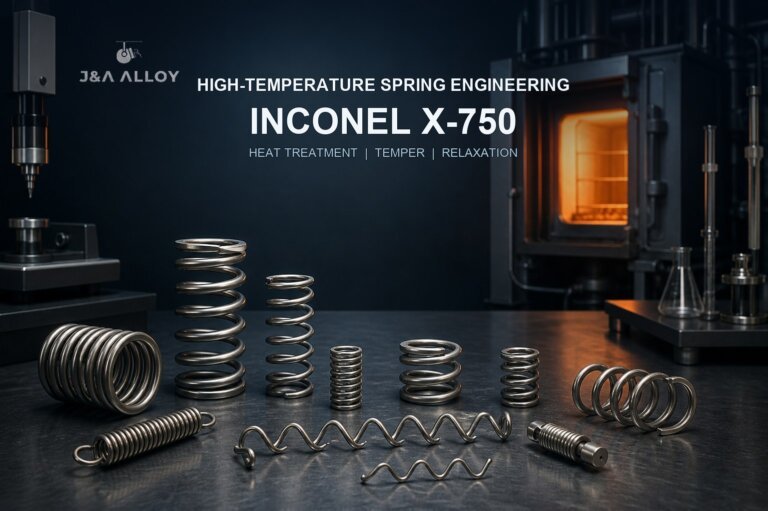
✅ Springs and fasteners — age-hardened K-500 springs maintain corrosion resistance while delivering strength that Monel 400 cannot achieve
✅ Downhole oilfield tooling — tubing hangers, mandrels, locking tools where sour service qualification is mandatory
✅ Wear-resistant components — pump impellers, sleeve bearings, valve trim where erosion-corrosion resistance benefits from higher hardness
✅ Cryogenic hardware requiring high strength — valves and shafts in LNG service where Monel 400’s lower yield would require oversized geometry
✅ Marine propeller shafts and rudder components — where shaft diameter optimization reduces bearing and seal costs system-wide
Neither Alloy Is Adequate For:
❌ Concentrated HCl above 5% — use Hastelloy C-276 (see Article 29)
❌ High-temperature service above 400°C — Monel alloys lose strength rapidly; use Inconel 600/601 (see Article 27)
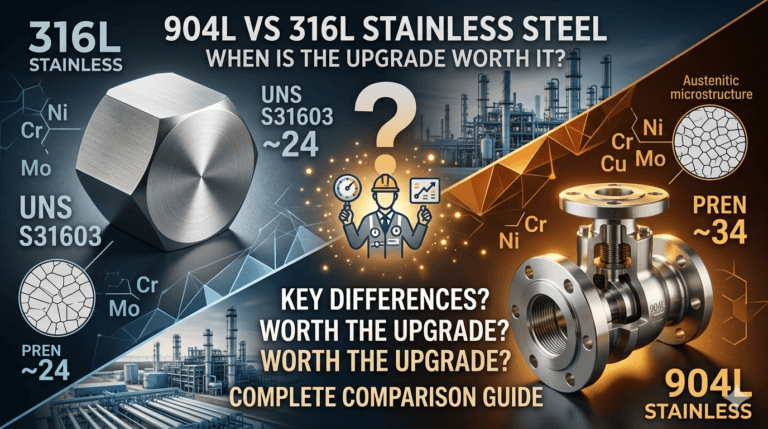
❌ Highly oxidizing environments (nitric acid, bleach) — use 304L/316L or Incoloy 825 (see Articles 22, 24)
❌ High-stress aerospace turbine applications — use Inconel 718 or Nimonic 105 (see Articles 20, 21)
Cost Comparison: When Is K-500 Justified?
Indicative raw material pricing:
| Form | Monel 400 | Monel K-500 | Premium |
|---|---|---|---|
| Round bar (50 mm) | $28–38/kg | $40–55/kg | +35–45% |
| Plate (12 mm) | $32–42/kg | $45–60/kg | +35–45% |
| Wire (3 mm) | $40–55/kg | $55–75/kg | +35–40% |
The premium reflects:
- Higher raw material cost (aluminum and titanium additions)
- Additional processing (solution anneal + aging)
- Tighter chemistry control
- Smaller production volumes
Total cost-of-ownership analysis:
For a centrifugal pump shaft (80 mm diameter × 1.2 m length):
| Factor | Monel 400 Shaft | Monel K-500 Shaft |
|---|---|---|
| Shaft diameter (for same torque) | 100 mm | 69 mm |
| Material cost (per shaft) | $2,100 | $1,950 (smaller diameter) |
| Bearing cost (smaller ID) | $640 | $410 |
| Seal cost (smaller ID) | $890 | $560 |
| Casing material (smaller bore) | Baseline | −$850 |
| Total pump cost | Baseline | −$880 (8% saving) |
In this common scenario, the higher per-kg cost of K-500 is more than offset by system-level savings from the smaller shaft diameter. This is the economic case for K-500 that often justifies the upgrade even when 400’s corrosion resistance would be technically adequate.
Quick Comparison: Monel K-500 vs Monel 400
| Property | Monel 400 | Monel K-500 | Advantage |
|---|---|---|---|
| Yield strength | 240 MPa | 720 MPa | K-500 (3×) |
| UTS | 550 MPa | 1,000 MPa | K-500 (1.8×) |
| Hardness | 130 HB | 280 HB | K-500 |
| Elongation | 40% | 25% | 400 |
| Impact toughness | Higher | Lower | 400 |
| Corrosion resistance | Excellent | Equivalent | Tie |
| HF resistance | Excellent | Good (SCC risk) | 400 |
| Sour service (NACE) | Yes | Yes (≤HRC 35) | Tie |
| Weldability | Excellent | Limited | 400 |
| Machinability (aged) | Difficult | Better | K-500 |
| Cost per kg | Lower | +35–45% | 400 |
| Pump shaft optimized | No | Yes | K-500 |
| Cryogenic strength | Lower | Higher | K-500 |
Frequently Asked Questions
Q1: Can I substitute Monel 400 for Monel K-500 in a pump shaft design to save cost?
Generally no — not without re-engineering the shaft and surrounding components. K-500’s higher yield strength (720 vs 240 MPa) is typically designed into the shaft diameter, bearing size, and seal geometry. Substituting 400 at the same diameter would risk shaft yielding under design torque loads. Substituting 400 and increasing the shaft diameter to compensate would require larger bearings, seals, and casing — typically increasing total pump cost more than the K-500 material premium. The correct cost-reduction approach is usually to evaluate alternative age-hardenable alloys (17-4PH stainless for non-corrosive service, or precipitation-hardened stainless for mildly corrosive service) rather than downgrade to Monel 400.
Q2: Is Monel K-500 compliant with NACE MR0175 for sour service?
Yes — Monel K-500 is listed in NACE MR0175 / ISO 15156 Part 3 for sour oil and gas service in the age-hardened condition, with the hardness limit of HRC 35 maximum. Standard aging treatments typically produce HRC 28–34, which is within the qualification envelope. K-500 has been used for decades in tubing hangers, valve stems, and downhole tools in sour gas wells containing H₂S at high pressure. Always verify with the material certificate that hardness is within specification.
Q3: Why is Monel K-500 more difficult to weld than Monel 400?
K-500’s aluminum and titanium content creates two welding challenges. First, the HAZ can experience premature γ′ precipitation during the weld thermal cycle, producing a hard, brittle zone with high residual stress. Second, under residual weld stress, the age-hardening reaction can cause strain-age cracking — a delayed cracking mechanism that can occur hours or days after welding. Standard practice is to weld in the solution-annealed condition, then re-solution-anneal and age the complete component. For most K-500 applications, designs avoid welding entirely — components are machined from solid bar stock.
Q4: Which alloy is better for cryogenic service?
Both alloys are FCC and retain ductility to -196°C and below, but they serve different cryogenic roles. Monel 400 is preferred for toughness-critical cryogenic components (LNG storage fittings, valves in cold boxes) where maximum impact energy absorption is required. Monel K-500 is preferred for strength-critical cryogenic components (pump shafts, valve stems) where higher yield strength allows smaller, lighter components. Both alloys are used in LNG plants — selection depends on whether the design is toughness-limited or strength-limited.
Q5: How does Monel K-500 compare to 17-4PH stainless steel for pump shafts?
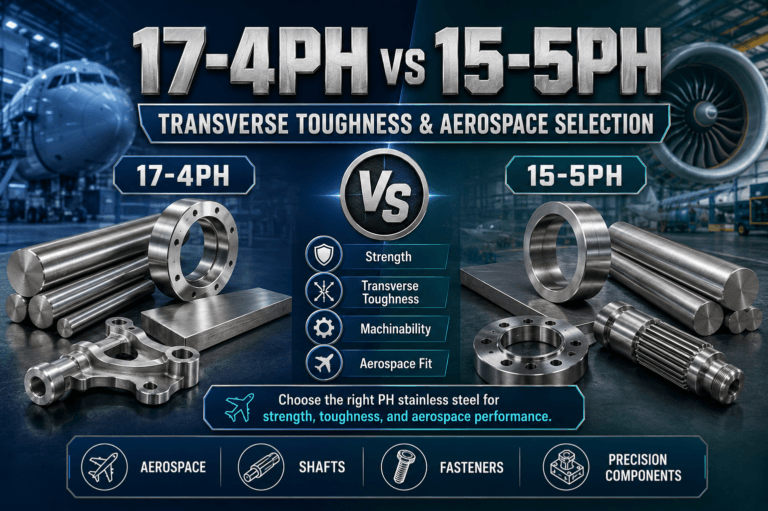
17-4PH (see Article 19) is a precipitation-hardening stainless steel that achieves similar strength to K-500 at roughly one-third the cost. The trade-off is corrosion resistance — 17-4PH is adequate for freshwater and mild industrial environments, but it cannot match K-500’s resistance to seawater, HF, sour gas, or chloride-bearing media. For seawater pumps, chemical process pumps, and sour service valves, K-500 is the correct choice despite the cost premium. For cooling water pumps, hydraulic system components, and general industrial service, 17-4PH is usually adequate and far more economical.
Conclusion
Monel K-500 and Monel 400 are not competing alloys — they are complementary engineering tools that share the same corrosion-resistant foundation but serve fundamentally different structural roles.
Monel 400 remains the workhorse of the Ni-Cu alloy family: easy to weld, available in every product form, qualified for HF alkylation service, and economically priced for general marine and chemical applications. Its limitation is mechanical strength — at 240 MPa yield, it cannot carry the torque, pressure, or fatigue loads of demanding shaft and fastener applications without being oversized.
Monel K-500 solves that limitation by adding aluminum and titanium to produce a precipitation-hardened alloy with three times the yield strength while preserving the Ni-Cu corrosion behavior. For pump shafts, valve stems, springs, and sour-service downhole tooling, K-500’s combination of strength, toughness, and corrosion resistance is unmatched in the nickel alloy family — and the system-level weight and cost savings from smaller shaft diameters often recover the per-kg material premium.
Selection rule of thumb: If your component is a welded fabrication, a large casting, or a pressure vessel — choose Monel 400. If your component is a machined shaft, stem, fastener, or spring operating in a corrosive environment — choose Monel K-500. The two alloys rarely compete for the same application; their engineering niches are well-defined and rarely overlap.
J&A Alloy supplies Monel 400 and Monel K-500 in bar, plate, pipe, and wire forms from ASTM-certified stock, with full mill test reports and NACE MR0175 compliance documentation. Contact our metallurgical team for application-specific selection guidance and competitive pricing on both standard and non-standard sizes.