Introduction
In the pharmaceutical and biotechnology industries, the production environment is defined by two relentless requirements: zero contamination and total sterilization. Equipment such as bioreactors, fermenters, and piping systems must not only resist aggressive cleaning chemicals but also ensure that no metallic ions leach into the high-value biological products.
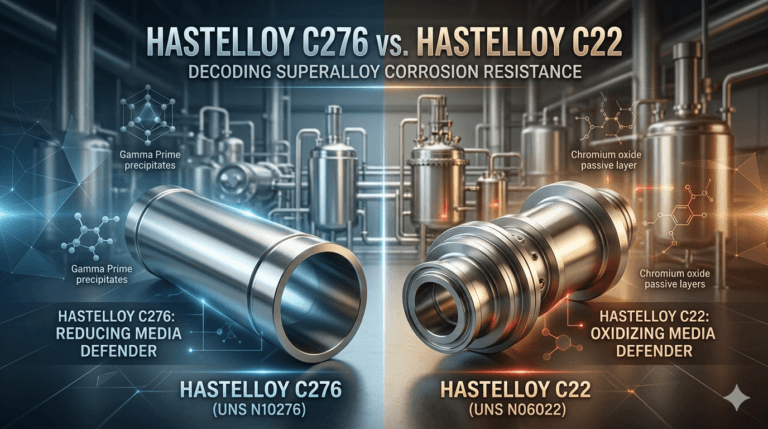
While 316L stainless steel has long been the industry standard, the rise of complex drug formulations and harsher Clean-in-Place (CIP) cycles has pushed standard materials to their limits. Today, high-performance nickel-based alloys like Hastelloy C22 (UNS N06022) and AL-6XN are becoming the new benchmarks for material integrity. At JA Alloy, we provide the ultra-smooth, corrosion-resistant materials necessary to maintain the highest standards of pharmaceutical purity.
1. The Challenge: Rouge and Pitting in High-Purity Water
One of the most persistent issues in pharmaceutical manufacturing is “Rouging”—a form of surface oxidation that occurs in high-purity water systems (WFI).
What is Rouge?
Rouge consists of iron oxide, hydroxide, or carbonate particles that form on the surface of stainless steel. In biological production, even microscopic rouge particles can catalyze the degradation of proteins or contaminate a batch of vaccines, leading to catastrophic financial losses.
Beyond 316L: The Case for Hastelloy C22
When standard 316L fails due to rouging or chloride-induced pitting (common in buffer solutions), Hastelloy C22 offers a superior solution. Its high Chromium (22%) and Molybdenum (13%) content creates a passive layer so stable that it is virtually immune to the formation of rouge, ensuring a pristine production environment for years rather than months.
2. Resistance to CIP and SIP Cycles
Pharmaceutical equipment undergoes frequent Clean-in-Place (CIP) and Steam-in-Place (SIP) cycles. These processes involve:
- Aggressive Chemicals: Exposure to sodium hydroxide (caustic) and various acids at high temperatures.
- Thermal Shock: Rapid transitions from ambient temperatures to pressurized steam at 121°C or higher.
Materials supplied by JA Alloy, particularly Hastelloy C22 and Inconel 625, exhibit exceptional resistance to these cyclic stresses. Their ability to maintain a smooth surface finish (low Ra value) after repeated chemical exposure is critical for preventing biofilm adhesion and ensuring successful sterilization.
3. Surface Finish: The Ra Factor
In the biotech world, the “Chemistry” of the metal is only half the story; the “Geometry” of the surface is the other.
- Electropolishing: Most pharmaceutical alloys must be electropolished to achieve a surface roughness (Ra) of less than 0.4 μm (15 μin).
- JA Alloy’s Quality Control: We ensure that our Hastelloy C22 sheets and tubes have a uniform microstructure that responds predictably to electropolishing, eliminating the “orange peel” effect that can trap bacteria in microscopic pits.
| Material | Typical Ra (Mill Finish) | Electropolished Ra | Pitting Resistance (PREN) |
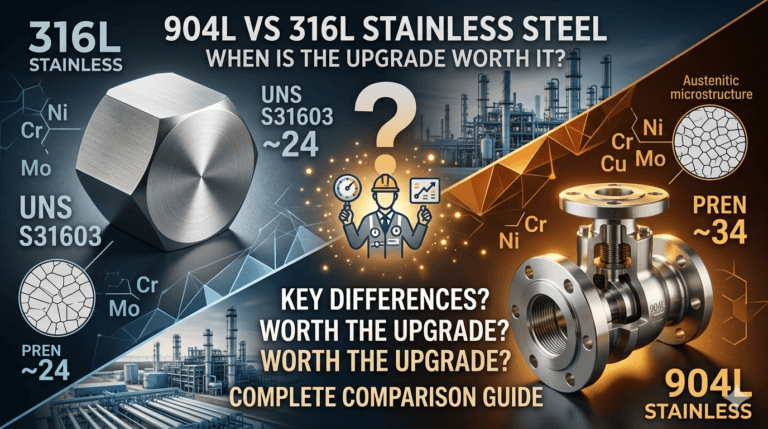
| 316L Stainless | 0.8 – 1.2 μm | 0.4 μm | ~24 |
| Hastelloy C22 | 0.5 – 0.8 μm | < 0.2 μm | ~47 |
4. Critical Applications in Bio-Processing
Where do JA Alloy’s high-purity materials play a role?
Bioreactors and Fermenters
The “heart” of drug production. Hastelloy C22 is used for the internal skins of vessels where the most sensitive cell cultures reside, protecting them from metallic ion interference.
Chromatography Columns
High-pressure chromatography requires materials that can handle saline buffers and high-pressure cycles without leaching.
Heat Exchangers
Used for cooling or heating sensitive media. The high thermal conductivity and corrosion resistance of nickel alloys ensure efficient heat transfer without risking cross-contamination.
5. Regulatory Compliance and Documentation
In the B2B pharmaceutical sector, the “Paperwork” is as important as the “Pipe.” Every component must be fully traceable to satisfy FDA and EMA requirements.
JA Alloy provides a complete documentation package, including:
- MTRs (Material Test Reports): Certifying chemical composition and mechanical properties.
- Surface Roughness Certification: Documenting the Ra values post-polishing.
- Heat Traceability: Ensuring every inch of material can be traced back to the original melt batch.
6. Economic Impact: Reducing NPT (Non-Productive Time)
While the initial cost of Hastelloy C22 is higher than 316L, the Total Cost of Ownership (TCO) is significantly lower for critical pharmaceutical lines.
- Fewer Passivation Cycles: High-purity alloys require less frequent chemical passivation.
- Zero Batch Loss: Eliminating the risk of rouge-related contamination saves millions.
- Extended Equipment Life: C22 components often outlast 316L by a factor of 5 to 1.
Conclusion
As the pharmaceutical industry moves toward more complex biotherapeutics, the demand for high-purity materials will only grow. Hastelloy C22 (UNS N06022) represents the ultimate insurance policy for your production line, combining unmatched chemical resistance with the surface stability required for biotech excellence.