Introduction
As global energy exploration pushes into deeper waters and more aggressive geological formations, the challenge of material failure has never been more acute. The combination of High Pressure, High Temperature (HPHT) and the presence of corrosive agents like Hydrogen Sulfide (H<sub>2</sub>S), Carbon Dioxide (CO<sub>2</sub>), and chlorides creates a “perfect storm” for metal degradation.
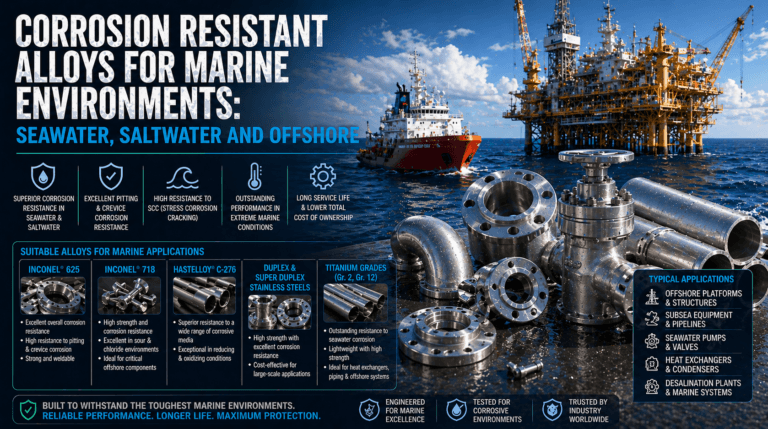
To combat these conditions, the industry relies on Corrosion Resistant Alloys (CRA). From nickel-based superalloys like Inconel 718 to specialized stainless steels like 254SMO, these materials are the primary defense against Stress Corrosion Cracking (SCC) and localized pitting. At JA Alloy, we provide the technical expertise and high-performance materials necessary to ensure the integrity of downhole tools and subsea infrastructure.
1. The Threat Matrix: Sour Service and Corrosion Mechanisms
In the Oil & Gas sector, “Sour Service” refers to environments containing significant amounts of H2S. This gas is not only toxic to humans but catastrophic for standard carbon steels.
Sulfide Stress Cracking (SSC)
SSC is a form of hydrogen embrittlement that occurs when H2S reacts with the metal surface. In high-strength steels, this leads to sudden, brittle failure without warning. CRAs are specifically designed to resist this mechanism by maintaining a stable atomic lattice that resists hydrogen penetration.
Chloride Pitting and Crevice Corrosion
Deepwater wells often contain high concentrations of brine (chlorides). At elevated temperatures, these ions break down the passive protective layer of standard alloys, leading to deep “pits” that can breach pressure-containing equipment in weeks.
CO2 Corrosion (Sweet Corrosion)
While not as lethal as H2S, CO2 forms carbonic acid in the presence of water, leading to rapid general thinning of metal walls. CRAs with high Chromium content are essential to forming the oxide barrier needed to stop this acid attack.
2. High-Performance CRAs: The JA Alloy Portfolio
Selecting the right CRA requires balancing mechanical strength with corrosion resistance. Below are the industry standards supplied by JA Alloy:
| Material Category | Examples | Key Advantage in Oil & Gas |
| Nickel-Base Alloys | Inconel 718 (N07718) | Exceptional yield strength for high-pressure downhole tools. |
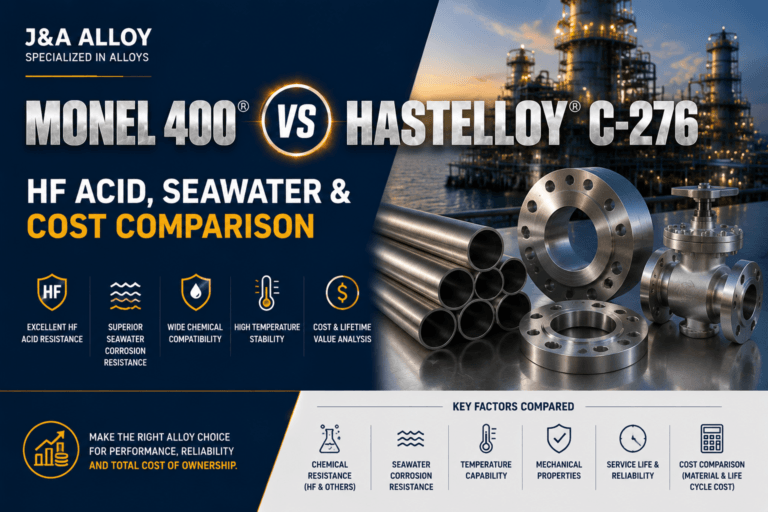
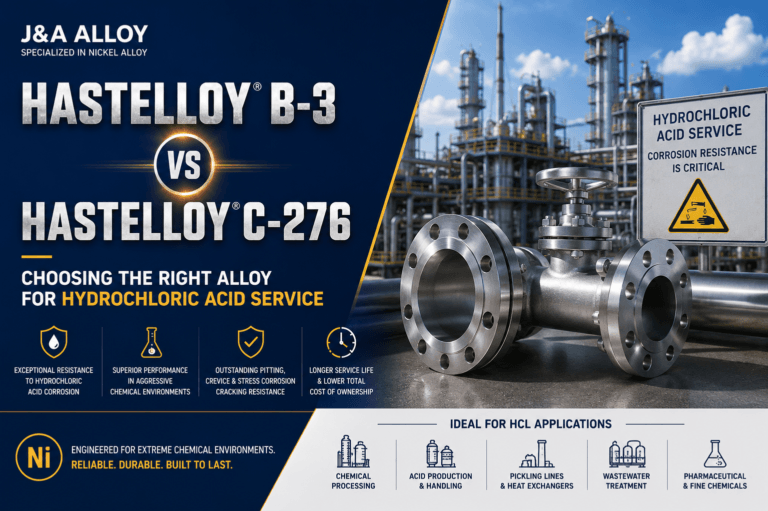
| C-Series Alloys | Hastelloy C276 (N10276) | The “universal” choice for the most aggressive sour environments. |
| Super Austenitics | 254SMO (S31254) | Cost-effective resistance to high-chloride sea water and brine. |
| Duplex Stainless | 2205 / 2507 | High strength and good resistance to CO2 corrosion. |
3. Spotlight on Inconel 718 in Sour Service
Inconel 718 (UNS N07718) is the workhorse of the HPHT sector. However, for Oil & Gas applications, it must meet specific metallurgical requirements defined by NACE MR0175 / ISO 15156.
- Heat Treatment Matters: For aerospace, 718 is optimized for creep. For Oil & Gas, the heat treatment is adjusted to optimize ductility and toughness to prevent cracking in H2S environments.
- Hardness Limits: NACE standards typically limit the hardness of 718 to 40 HRC (or 45 HRC in specific conditions) to ensure it remains resistant to hydrogen-induced failures.
4. Subsea Infrastructure and Seawater Injection
The “Topside” and “Subsea” sections of a platform face different challenges. Seawater injection systems, used to maintain well pressure, are exposed to raw, oxygenated seawater.
This is where 254SMO (UNS S31254) excels. With a PREN > 42, it provides the necessary protection against pitting in oxygenated brine at a much lower cost than solid nickel alloys. At JA Alloy, we provide 254SMO in heavy-wall piping and forged connectors specifically for subsea manifolds.
5. Selection Logic: Cost vs. Risk
In B2B procurement, the “cheapest” alloy is often the most expensive in the long run.
- Life Cycle Cost (LCC): Replacing a failed downhole string can cost millions in “non-productive time” (NPT). Moving from a 13Cr steel to a high-nickel CRA like C276 can extend the life of a well from 2 years to 20 years.
- Environmental Compliance: Preventing leaks in sour wells is not just a financial issue; it is a regulatory and environmental mandate. Utilizing certified CRAs is the industry’s primary method for risk mitigation.
6. Technical Assurance at JA Alloy
At JA Alloy, we don’t just ship metal; we provide documented reliability.
- NACE Compliance: All our Oil & Gas grade materials are certified to NACE MR0175 / ISO 15156.
- Microstructural Analysis: We perform rigorous grain size and phase stability testing to ensure no deleterious phases (like Sigma phase) are present.
- Custom Forging: We produce custom-dimensioned mandrels, valve bodies, and hangers tailored to your technical drawings.
Conclusion
As the Oil & Gas industry transitions toward more complex and “sour” reserves, the role of Corrosion Resistant Alloys becomes undeniable. Whether it is the high-strength resilience of Inconel 718 or the chemical immunity of Hastelloy C276, choosing the right material is the foundation of a safe and profitable operation.
Are you facing corrosion challenges in your current drilling project? Contact JA Alloy today for a technical consultation and a quote on NACE-compliant alloys.