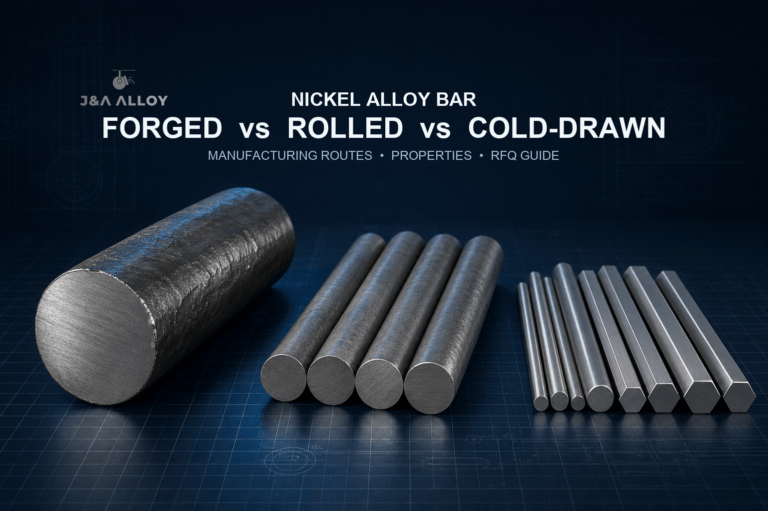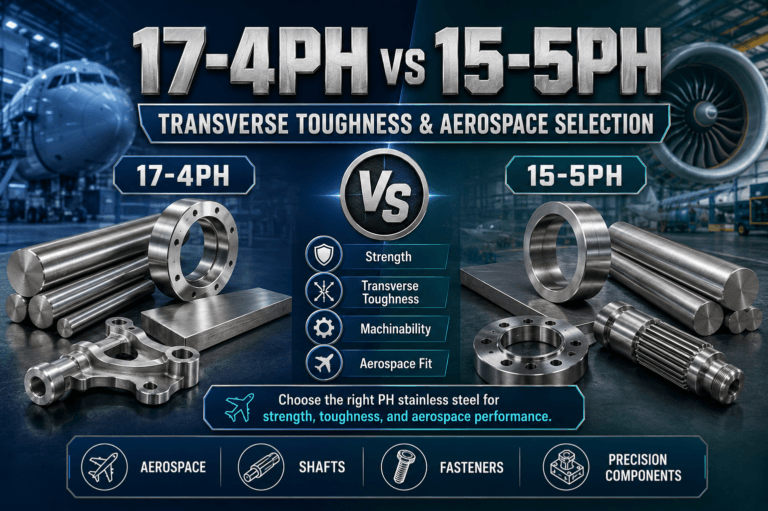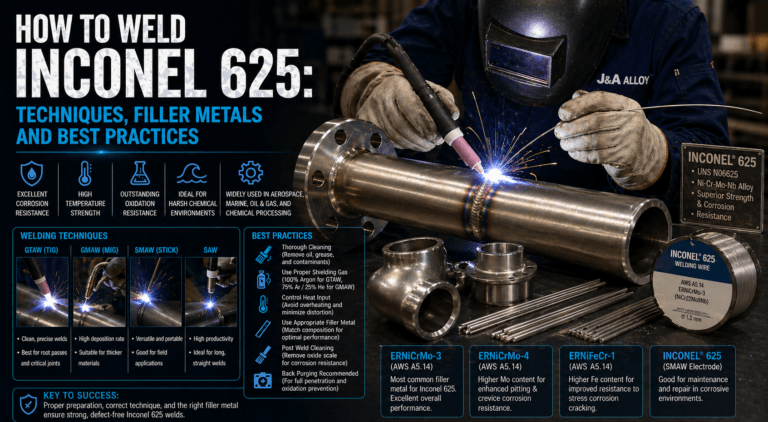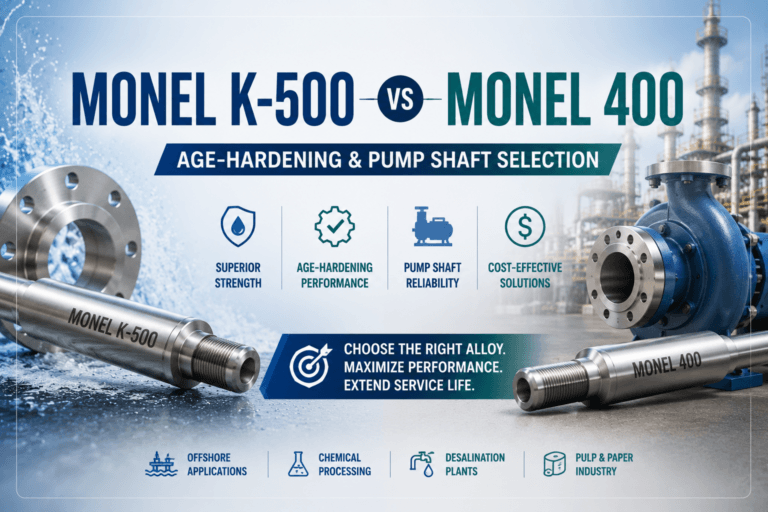
A nickel alloy ring can begin as a forged pancake, a seamless rolled ring, a trepanned plate or a section cut from large bar. All four routes can produce a circular blank, but they do not provide the same material flow, section capability, machining yield, inspection response or code status.
The cheapest blank is therefore not always the lowest-cost component. A plate-cut ring may waste less setup time but more alloy. A rolled ring may reduce machining stock but require dedicated tooling and minimum quantity. A forged pancake may offer flexibility but need substantial trepanning and turning.
This guide compares the routes and shows what to include in an RFQ.
Important: A ring’s final drawing, design code and material specification determine whether a particular starting product is acceptable. Do not substitute plate, bar or a generic ring blank for a specified forging without engineering approval.
The Short Answer
- Choose a seamless rolled ring for medium-to-large annular parts when near-net geometry, circumferential working and material yield justify the tooling and processing.
- Choose a forged pancake or pierced forging when flexibility, heavy-section work or low-volume custom geometry matters.
- Choose a plate-cut ring for relatively thin, low-volume components when the governing rules permit plate and the required diameter fits available plate.
- Choose a bar-cut ring only for smaller components where drilling or trepanning from bar is technically acceptable and economical.
Four Common Manufacturing Routes
Seamless rolled ring
A heated billet is upset, pierced and expanded over a mandrel or ring-rolling machine. The process enlarges diameter while controlling wall thickness and height.
Potential benefits include:
- near-net annular geometry;
- improved material yield compared with cutting a large center from solid stock;
- circumferentially developed deformation;
- availability of large diameters; and
- reduced rough-machining time.
Constraints include tooling, process development, minimum section ratios and producer-specific diameter or weight limits.
Forged pancake or pierced forging
A billet is upset into a disc or pancake. The center may be pierced during forging or trepanned later.
This route suits low quantities, heavy sections and custom blanks. It can provide substantial hot-work reduction but may require more machining than a rolled ring.
Plate-cut ring
A ring is cut from plate by waterjet, laser, plasma, saw or trepanning. The ring retains plate product-form characteristics and rolling orientation.
The route can be economical for thin or moderate sections and small quantities, but it creates a center drop and outer skeleton. Material yield deteriorates as the ring becomes thick or the diameter becomes large.
Bar-cut ring
A short length of round bar is drilled, bored or trepanned to create the inside diameter. It is practical for small rings but can consume substantial machining time and raw material.
Comparison Table
| Selection factor | Seamless rolled ring | Forged pancake or pierced forging | Plate-cut ring | Bar-cut ring |
|---|---|---|---|---|
| Best fit | Medium and large annular components | Heavy or custom low-volume blanks | Thin, low-volume rings | Small rings |
| Material yield | Usually high | Moderate | Application-dependent | Often low |
| Grain-flow tendency | Circumferential working | Depends on forging sequence | Plate rolling direction retained | Bar longitudinal direction retained |
| Machining stock | Near-net options available | Usually generous | Close profile possible | Heavy bore removal |
| Tooling and setup | Specialized | Flexible forging tooling | Cutting program and plate | Standard machining |
| Product-form concern | Forging or rolled forging | Forging | Plate | Bar |
Why Grain Flow Matters
Hot working elongates and redirects the internal flow pattern inherited from the billet. A seamless rolled ring generally develops flow around the circumference, which can be beneficial for components dominated by hoop loading.
However, grain flow is not a universal guarantee of superior performance. The value depends on:
- loading direction;
- alloy and heat treatment;
- forging reduction;
- section transitions;
- final machining depth;
- grain size; and
- discontinuity control.
A poor ring-rolling process does not become acceptable merely because the flow is circumferential. Likewise, an approved plate-cut ring may perform well when its design, properties and inspection are correctly addressed.
Product Form and Specification
ASTM B564 covers specified nickel alloy forgings, while ASTM B462 covers forged or rolled nickel alloy pipe flanges, forged fittings, valves and parts for corrosive high-temperature service for the alloys listed in its scope. The exact standard must match both the alloy and component category.
Plate-cut and bar-cut rings remain plate or bar products unless a governing specification explicitly recognizes another classification. Machining does not convert plate or bar into a forging.
Before ordering, confirm:
- product specification and edition;
- UNS number;
- forging class or component category;
- heat-treatment condition;
- mechanical-test location and orientation;
- NDE requirements; and
- code acceptance of the selected product form.
Starting Dimensions and Machining Allowance
An effective ring RFQ includes both finished and ordered dimensions.
Define:
- outside diameter;
- inside diameter;
- axial height;
- rectangular, tapered or contoured cross-section;
- machining allowance on each surface;
- fillet or corner requirements;
- permitted cleanup loss;
- weight limit; and
- dimensional tolerance in the supplied condition.
Do not apply one blanket allowance to every surface. Oxide, scale, local grinding, distortion and section variation may differ between faces and diameters.
Heat Treatment
Many corrosion-resistant nickel alloy rings are supplied solution annealed. Precipitation-hardenable alloys may require solution treatment, stabilization, aging or a sequence coordinated with rough and finish machining.
Clarify:
- whether heat treatment occurs before or after rough machining;
- maximum furnace charge section;
- quench method;
- thermocouple and chart requirements;
- whether stress relief is permitted;
- final hardness and mechanical properties; and
- whether subsequent customer heat treatment is planned.
Large rings can cool differently from small test coupons. Mechanical-test location and heat-treatment representation must therefore be agreed.
Inspection Strategy
Ultrasonic testing
UT is common for forged rings, but “100% UT” is incomplete. Specify the examination standard, calibration, scanning surfaces, coverage, reference reflectors and acceptance class.
Ring geometry can create dead zones and curved-surface coupling challenges. Confirm the proposed technique before manufacture.
Liquid penetrant testing
PT can detect surface-breaking imperfections after scale removal or machining. Define the stage of examination and whether locally conditioned areas require re-examination.
Dimensional inspection
Include OD, ID, height, concentricity, runout and flatness where they affect machining setup or finished geometry.
Macrostructure and grain size
For critical forgings, project specifications may require macroetch, grain-flow examination or grain-size testing. These requirements must identify the sample location and acceptance criteria.
Common Ordering Mistakes
- Calling every circular blank a forging.
- Substituting plate-cut rings for forged rings without approval.
- Omitting the finished component drawing.
- Providing only finished dimensions with no machining allowance.
- Assuming ring rolling always produces ideal grain flow.
- Writing “100% UT” without a method and acceptance level.
- Ignoring test location and orientation.
- Failing to coordinate heat treatment with machining.
- Omitting concentricity and runout requirements.
- Comparing quotations without checking starting weight and included inspection.
RFQ Checklist
Material and route
- alloy and UNS number;
- product standard and edition;
- seamless rolled ring, forged blank, plate-cut or bar-cut route;
- whether alternative routes are permitted; and
- minimum hot-work reduction, if required.
Geometry
- finished drawing;
- ordered OD, ID and height;
- machining allowance by surface;
- tolerances, concentricity and runout;
- maximum weight; and
- quantity.
Quality
- heat treatment;
- mechanical tests and specimen locations;
- UT and PT procedures and acceptance criteria;
- grain size or macrostructure;
- dimensional report;
- marking and traceability; and
- EN 10204 or other certification.
Frequently Asked Questions
Is a rolled ring a forging?
A seamless rolled ring is commonly treated as a wrought forging product, but the purchase order must cite the governing specification and required qualification.
Is a plate-cut ring weaker?
Not automatically. It has plate properties and orientation rather than ring-forging flow. Suitability depends on design, loading, specification, thickness and inspection.
Which route gives the best material yield?
Seamless ring rolling often gives better yield for large annular shapes, but quantity, tooling, section ratio and available starting stock determine the commercial result.
Can a rolled ring be supplied near net shape?
Yes, within producer capability. Enough allowance must remain for scale removal, distortion and final machining.
Key Takeaways
Select the ring route by finished geometry, loading, code, quantity, alloy availability, machining plan and inspection risk. Product form matters as much as chemistry.
J&A Alloy supplies nickel alloy forged blanks, seamless rolled rings and machined ring products for chemical processing, oil and gas, power and industrial equipment. Send us the drawing, alloy, standard, route, heat treatment and inspection requirements for review.
CTA: Request a Nickel Alloy Ring Quote
References
- ASTM B564 — Nickel Alloy Forgings
- ASTM B462 — Forged or Rolled Nickel Alloy Flanges, Fittings and Parts
Confirm the specification edition required by the purchase order and consult the complete standard before procurement or code-compliance decisions.