“Which nickel alloy has the best corrosion resistance?” is the question materials engineers ask most — and it is also the question with the most misleading answers. The truth is there is no single “most corrosion-resistant” nickel alloy. The answer depends entirely on the specific environment: the acid type and concentration, temperature, chloride content, oxidation potential, and whether the component is exposed to stagnant or flowing conditions.
This guide provides a systematic, environment-by-environment comparison across the nickel alloy families most commonly used in chemical processing, oil and gas, marine, and power generation applications.
Before reading: If you are selecting an alloy for a new application, see our Ultimate Nickel Alloy Selection Guide for a comprehensive overview. For UNS numbers and specifications, see our Understanding UNS Numbers guide.
1. Understanding How Nickel Alloys Resist Corrosion
1.1 The Corrosion Resistance Mechanism
Nickel alloys achieve corrosion resistance primarily through their passive film — a thin (2-5nm), self-healing chromium oxide layer that forms on the surface. This film acts as a barrier between the metal and the environment. When the film is intact, corrosion rates are extremely low. When it breaks down locally, different failure modes take over.
The key alloying elements that determine corrosion resistance:
| Element | Role in Corrosion Resistance |
|---|---|
| Chromium (Cr) | Primary driver of passive film formation; higher Cr = better oxidation resistance |
| Molybdenum (Mo) | Dramatically improves resistance to chloride-induced pitting and crevice corrosion; the single most important element for seawater and chloride environments |
| Nickel (Ni) | Provides base stability; improves resistance to reducing acids; stabilizes austenitic structure |
| Tungsten (W) | Synergistic with Mo; enhances resistance to localized corrosion in acidic chlorides |
| Niobium (Nb) | Stabilizes against sensitization (carbide precipitation); improves high-temperature strength |
| Copper (Cu) | Exceptional resistance to reducing acids, especially sulfuric and hydrofluoric acid |
| Nitrogen (N) | Improves pitting resistance; stabilizes austenitic structure |
1.2 The Five Failure Modes You Need to Know
Before comparing alloys, you need to understand the five corrosion mechanisms that affect nickel alloys:
1. Uniform Attack (General Corrosion) The metal corrodes evenly across its surface. Predictable, measurable, and the least dangerous failure mode. Rate is expressed in mm/year (mmpy). Nickel alloys typically show <0.1 mmpy in passive condition.
2. Pitting Corrosion Localized attack that creates small holes in the passive film. The most dangerous failure mode for nickel alloys because it is difficult to detect, progresses rapidly, and causes sudden perforation. Pitting is almost always chloride-induced.
3. Crevice Corrosion Accelerated corrosion inside gaps, under deposits, or in sheltered areas where the passive film breaks down due to differential aeration. Occurs at much lower temperatures than pitting — often at ambient temperature in seawater.
4. Intergranular Attack / Intergranular Corrosion (IGA/IGC) Localized attack along grain boundaries, caused by chromium depletion from carbide precipitation (sensitization) during improper heat treatment or welding. The HAZ (heat-affected zone) of a weld is the most vulnerable area.
5. Stress Corrosion Cracking (SCC) The simultaneous presence of tensile stress, a susceptible alloy, and a corrosive environment causes cracks to propagate along grain boundaries or through grains. Nickel alloys are generally resistant to chloride SCC, but specific alloys have specific thresholds.
2. PREN: The Benchmark Metric for Pitting Resistance
The most widely used metric for comparing localized corrosion resistance is PREN (Pitting Resistance Equivalent Number). While not a perfect predictor, it provides a useful shorthand for comparing alloys.
2.1 PREN Formula
The standard PREN formula used for nickel alloys:
PREN = %Cr + 3.3 × %Mo + 30 × %N
A higher PREN indicates greater resistance to pitting and crevice corrosion initiation.
2.2 PREN Comparison Table
| Alloy | UNS | Cr (%) | Mo (%) | N (%) | PREN (calculated) | Ranking |
|---|---|---|---|---|---|---|
| Hastelloy C-276 | N10276 | 14.5-16.5 | 15.0-17.0 | — | ~64-69 | 🥇 |
| Hastelloy C-22 | N06022 | 20.0-22.5 | 12.5-14.5 | — | ~62-66 | 🥈 |
| Hastelloy C-2000 | N06200 | 22.0-24.0 | 15.0-17.0 | — | ~72-78 | 🥇 |
| Hastelloy B-3 | N10675 | 1.0-3.0 | 27.0-32.0 | — | Low Cr, Mo-dominated | For reducing acids only |
| Inconel 625 | N06625 | 20.0-23.0 | 8.0-10.0 | — (Nb: 3.15-4.15) | ~40-47 | 🥉 |
| Inconel 718 | N07718 | 17.0-21.0 | 2.8-3.3 | — (Nb+Ta: 4.75-5.50) | ~28-34 | Not for corrosion-critical |
| Inconel 600 | N06600 | 14.0-17.0 | — | — | ~14-17 | Low |
| Incoloy 825 | N08825 | 19.5-23.5 | 2.5-3.5 | — (Ti: 0.6-1.2) | ~30-38 | Moderate |
| Incoloy 625 (note: same as Inconel 625) | N06625 | — | — | — | — | — |
| Monel 400 | N04400 | — | — | — (Cu: 28-34%) | Cu-dominant | Reducing acids, seawater |
Important: PREN has significant limitations — it does not account for tungsten (W) content, does not predict crevice corrosion, and does not reflect performance in specific acids. Use it as a starting point, not a final decision tool.
2.3 The Tungsten Factor
Hastelloy C-2000, C-22, and several newer alloys include tungsten (W ~ 2-4%), which is not captured in the standard PREN formula. Tungsten contributes substantially to resistance in chloride-containing acids. When comparing C-276 vs C-22, note that C-22’s superior performance in oxidizing environments comes from its higher chromium content, not just its PREN.
3. Environment-by-Environment Comparison
3.1 Seawater and Chloride Solutions
Seawater contains approximately 19,000 ppm chloride ions and is one of the most aggressive environments for metals. The key risks are crevice corrosion under biofouling deposits and pitting at elevated temperatures.
| Alloy | Seawater Performance | Critical Pitting Temp (°C) | Critical Crevice Temp (°C) | Notes |
|---|---|---|---|---|
| Hastelloy C-276 | Excellent | 90-100+ | 65-75 | Best conventional Hastelloy for seawater; requires stagnant-free flow |
| Hastelloy C-22 | Excellent | 90-100+ | 70-80 | Superior to C-276 in oxidizing chloride environments |
| Hastelloy C-2000 | Excellent | 100+ | 80-90 | Best all-around in seawater; newer alloy |
| Inconel 625 | Good | 50-60 | 30-40 | Widely used in offshore; limited by crevice corrosion threshold |
| Incoloy 825 | Moderate | 30-40 | <25 | Acceptable for quiescent seawater below 50°C |
| Monel 400 | Good | 30-40 | 20-30 | Excellent in flowing seawater; poor in aerated/acidic seawater |
| Inconel 600 | Poor | Not recommended | Not recommended | High risk of SCC in hot chloride |
Verdict for seawater: Hastelloy C-276/C-22 for critical applications. Inconel 625 for moderate service. Monel 400 for specific freshwater/seawater mixing zones.
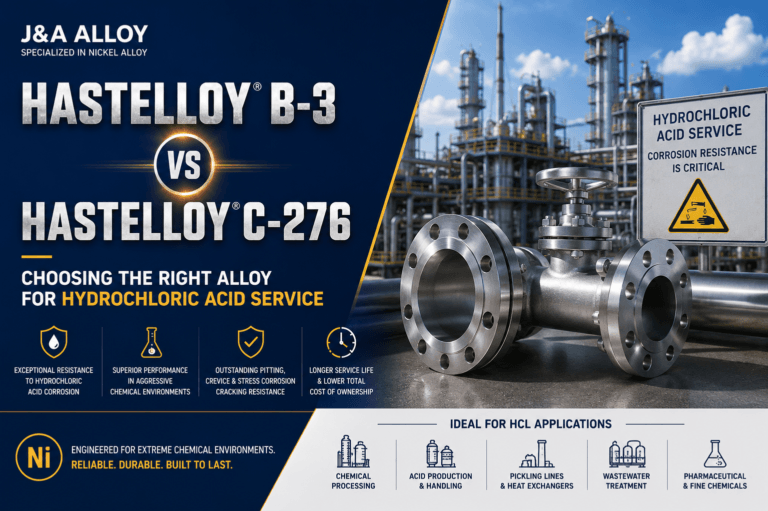
3.2 Hydrochloric Acid (HCl)
HCl is one of the most corrosive acids for most metals. Nickel alloys rely on molybdenum and copper content for HCl resistance.
| Alloy | Max Use Temp (°C) | Performance at Room Temp | Performance at 50-80°C |
|---|---|---|---|
| Hastelloy B-3 | 200-400°C (concentration-dependent) | Excellent | Excellent (to ~65% HCl) |
| Hastelloy C-276 | 65-85°C (concentration-dependent) | Excellent (dilute) | Limited above 5% HCl |
| Monel 400 | Up to 50°C | Excellent (dilute) | Limited above 1% HCl |
| Inconel 625 | Limited | Moderate | Poor above 1% HCl |
| Inconel 600 | Not recommended | Poor | Not recommended |
| Incoloy 825 | Not recommended | Poor | Not recommended |
Verdict for HCl: Hastelloy B-3 dominates in HCl service. C-276 can handle dilute HCl at moderate temperatures. Monel 400 for very dilute, low-temperature HCl.
Critical note: Hastelloy B-3 is specifically formulated to overcome the susceptibility of older Hastelloy B-2 to manufacturing-induced cracking. Always specify B-3, never B-2.
3.3 Sulfuric Acid (H₂SO₄)
Sulfuric acid is widely used in chemical processing. Performance varies dramatically with temperature and concentration.
| Alloy | Optimal Range | Max Temp | Notes |
|---|---|---|---|
| Hastelloy C-276 | 10-80% H₂SO₄ | 65-80°C | Excellent across most concentrations; best general-purpose choice |
| Hastelloy C-22 | 10-80% H₂SO₄ | 65-80°C | Similar to C-276; slightly better in oxidizing conditions |
| Hastelloy C-2000 | 10-80% H₂SO₄ | 80-100°C | Best high-temperature performance |
| Inconel 625 | 10-50% H₂SO₄ | 50-65°C | Moderate; not for high-temperature service |
| Incoloy 825 | <50% H₂SO₄, <50°C | 50°C | Good for dilute acid at ambient temperature |
| Monel 400 | 5-30% H₂SO₄ | 50°C | Good in dilute acid; fails in concentrated or aerated acid |
| Inconel 600 | Limited | Limited | Not recommended above trace levels |
Verdict for H₂SO₄: Hastelloy C-276 or C-2000 for most process environments. Incoloy 825 for moderate, low-temperature dilute acid.
3.4 Hydrofluoric Acid (HF)
HF acid is extremely aggressive and requires copper-containing alloys for acceptable performance.
| Alloy | Performance | Notes |
|---|---|---|
| Monel 400 | Excellent | Copper content (28-34%) provides outstanding resistance to HF; industry standard |
| Hastelloy B-3 | Good | Second choice; specify low carbon grade to prevent IGC |
| Inconel 625 | Moderate | Only in very dilute, low-temperature HF |
| All others | Poor to not recommended | High Mo and Cr content do not protect against HF |
Verdict for HF: Monel 400 is the standard choice for hydrofluoric acid service.
3.5 Phosphoric Acid (H₃PO₄)
Phosphoric acid is used in fertilizer production, food processing, and semiconductor manufacturing. Performance depends heavily on fluoride and chloride impurities.
| Alloy | Performance | Notes |
|---|---|---|
| Hastelloy C-276 | Excellent | Best across all concentrations and temperatures |
| Hastelloy C-22 | Excellent | Better in oxidizing conditions with high Fe³⁺ content |
| Inconel 625 | Good | Acceptable for clean H₃PO₄ below 80°C |
| Incoloy 825 | Good | Widely used in fertilizer production; moderate service |
| Monel 400 | Moderate | Only in high-purity, low-temperature H₃PO₄ |
Verdict for H₃PO₄: Hastelloy C-276 for contaminated/process acid. Incoloy 825 for clean acid in fertilizer production.
3.6 Nitric Acid (HNO₃)
Nitric acid is an oxidizing acid — nickel alloys with lower chromium content perform poorly.
| Alloy | Performance | Notes |
|---|---|---|
| Inconel 625 | Good | Acceptable in dilute HNO₃ below 60°C |
| Inconel 600 | Moderate | Better than most; still limited by lack of Mo |
| Hastelloy C-276 | Poor | High Mo content causes accelerated corrosion in HNO₃ |
| Hastelloy B-3 | Poor | Not suitable |
| Monel 400 | Poor | Not suitable |
Verdict for HNO₃: Standard austenitic stainless steels (304L, 316L) or aluminum are typically preferred for nitric acid service. Inconel 625 only for specific dilute, low-temperature applications.
3.7 Mixed Acids and Oxidizing Environments
This is where Hastelloy alloys demonstrate their full value. Real process environments rarely contain a single acid — they contain mixtures of acids, oxidizing agents, and chlorides.
| Environment | Recommended Alloy | Why |
|---|---|---|
| HCl + HF mixture | Hastelloy B-3 | Copper-free B-grade handles this combination |
| HCl + oxidizing agents | Hastelloy C-276 or C-22 | C-22’s higher Cr handles oxidizing conditions better |
| H₂SO₄ + Cl⁻ + Fe³⁺ | Hastelloy C-276 | Highest Cr+Mo provides maximum versatility |
| HNO₃ + HF (pickling acid) | Hastelloy C-276 | Standard for pickling equipment |
| Organic acids + chlorides | Inconel 625 | Good balance of corrosion resistance and cost |
| Seawater + H₂S (sour service) | Hastelloy C-276 or C-22 | C-22 preferred for simultaneous oxidizing+sour conditions |
| Chlorides + oxidizing salts | Hastelloy C-2000 | Best in high-temperature chloride+oxidizer combinations |
4. High-Temperature Corrosion Performance
4.1 Oxidation Resistance
At elevated temperatures, the corrosion mechanism shifts from electrochemical (wet) to chemical (dry) oxidation. Chromium oxide (Cr₂O₃) provides the protective barrier, so higher chromium content translates directly to higher oxidation resistance.
| Alloy | Max Continuous Oxidation Temp (°C) | Performance Notes |
|---|---|---|
| Inconel 601 | 1,200°C | Best oxidation resistance of standard nickel alloys; aluminum addition (4-6%) |
| Hastelloy X | 1,200°C | Excellent high-temperature strength + oxidation; AMS 5536 aerospace grade |
| Inconel 617 | 1,100°C | Excellent oxidation; cobalt addition improves stability |
| Inconel 625 | 980°C | Good; precipitation-hardened structure maintains strength |
| Inconel 718 | 650°C | Good to 650°C; aging heat treatment maintains properties |
| Hastelloy C-276 | 600°C | Moderate; Cr₂O₃ layer volatilizes above 800°C in presence of moisture |
| Incoloy 800H/800HT | 1,100°C | Excellent creep rupture strength + oxidation |
| Inconel 600 | 1,150°C | Good; higher purity (601) preferred for cyclic oxidation |
4.2 High-Temperature Sulfidation
In refining and petrochemical environments, H₂S and sulfur compounds cause sulfidation corrosion. The nickel content is more protective than chromium in sulfidation environments.
| Alloy | Sulfidation Resistance | Notes |
|---|---|---|
| Inconel 600 | Excellent | Nickel base provides best sulfidation resistance |
| Incoloy 800H | Excellent | Widely used in refinery furnace tubes |
| Hastelloy C-276 | Good (up to 650°C) | Good but not as effective as Inconel 600 for pure sulfidation |
| Inconel 625 | Good (up to 650°C) | Acceptable; less nickel than 600 |
Verdict for sulfidation: Inconel 600 or Incoloy 800H for pure sulfidation environments.
5. Stress Corrosion Cracking (SCC) in Nickel Alloys
5.1 Chloride-Induced SCC
| Alloy | SCC Resistance | Threshold | Notes |
|---|---|---|---|
| Inconel 600 | Excellent | No known threshold in boiling MgCl₂ | Most resistant to chloride SCC of all common alloys |
| Inconel 625 | Excellent | >50% boiling MgCl₂ | Good; age-hardened condition is slightly less resistant |
| Inconel 718 | Good | Moderate | Better than austenitic stainless; age-hardened condition more susceptible |
| Hastelloy C-276 | Excellent | >50% boiling MgCl₂ | Outstanding resistance; widely specified for chloride SCC service |
| Incoloy 825 | Good | Moderate | Better than stainless steel but less than Inconel/Hastelloy |
| Austenitic SS 316L | Poor | ~45°C threshold | Reference baseline |
| Monel 400 | Good | Limited data | Good; but avoid in aerated/acidic seawater |
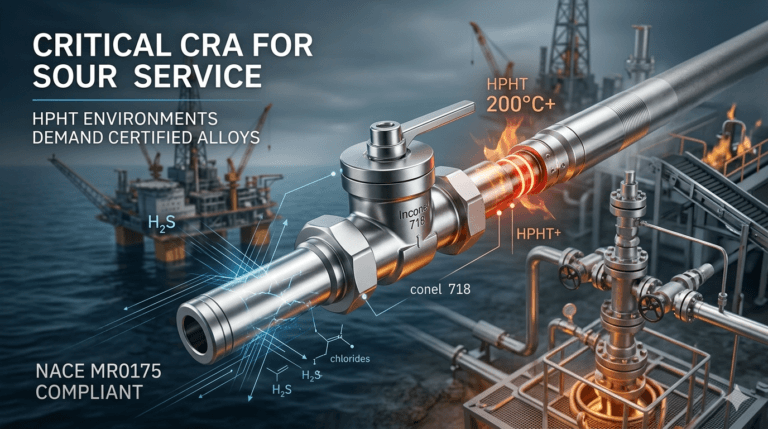
5.2 Sour Gas (H₂S) Stress Cracking
For oil and gas applications with H₂S (sour service), NACE MR0175 / ISO 15156 governs material selection.
| Alloy | Sour Service Suitability | Notes |
|---|---|---|
| Hastelloy C-276 | ✓ Approved | Approved for most sour service levels; low carbon grade preferred |
| Hastelloy C-22 | ✓ Approved | Better oxidation resistance than C-276 in sour service |
| Inconel 625 | ✓ Approved | Widely used in downhole and surface equipment |
| Inconel 718 | ✓ Approved (with limits) | Approved for specific hardness and condition requirements |
| Monel 400 | ✓ Approved (with limits) | Limited to specific H₂S partial pressures and temperature |
| Incoloy 825 | ✓ Approved | Common in oilfield piping and downhole tubulars |
6. The Complete Comparison Matrix
Putting it all together — a single matrix showing how each alloy performs across major environments:
| Environment | C-276 | C-22 | C-2000 | B-3 | Inconel 625 | Inconel 600 | Incoloy 825 | Monel 400 |
|---|---|---|---|---|---|---|---|---|
| Seawater (flowing) | ⭐⭐⭐ | ⭐⭐⭐ | ⭐⭐⭐ | ✗ | ⭐⭐ | ⭐ | ⭐ | ⭐⭐ |
| HCl (any conc.) | ⭐⭐ | ⭐⭐ | ⭐⭐ | ⭐⭐⭐ | ⭐ | ✗ | ✗ | ⭐⭐ |
| H₂SO₄ (10-80%) | ⭐⭐⭐ | ⭐⭐⭐ | ⭐⭐⭐ | ⭐⭐ | ⭐⭐ | ⭐ | ⭐⭐ | ⭐⭐ |
| HF acid | ⭐ | ⭐ | ⭐ | ⭐⭐ | ⭐ | ✗ | ✗ | ⭐⭐⭐ |
| H₃PO₄ | ⭐⭐⭐ | ⭐⭐⭐ | ⭐⭐⭐ | ⭐⭐ | ⭐⭐ | ⭐ | ⭐⭐ | ⭐ |
| HNO₃ | ⭐ | ⭐ | ⭐ | ⭐ | ⭐⭐ | ⭐⭐ | ⭐ | ⭐ |
| High-temp oxidation | ⭐⭐ | ⭐⭐ | ⭐⭐ | ✗ | ⭐⭐ | ⭐⭐ | ⭐⭐ | ⭐ |
| Sour gas (H₂S) | ⭐⭐⭐ | ⭐⭐⭐ | ⭐⭐⭐ | ⭐ | ⭐⭐⭐ | ⭐⭐ | ⭐⭐⭐ | ⭐⭐ |
| Chloride SCC | ⭐⭐⭐ | ⭐⭐⭐ | ⭐⭐⭐ | ⭐ | ⭐⭐⭐ | ⭐⭐⭐ | ⭐⭐ | ⭐⭐ |
| Cost (relative) | $$$ | $$$ | $$$$ | $$$$ | $$$ | $$ | $$ | $$$ |
Legend: ⭐⭐⭐ = Excellent / ⭐⭐ = Good / ⭐ = Limited / ✗ = Not recommended
7. How to Select the Right Alloy: A Decision Framework
Step 1: Identify the Corrosion Threat
- Chloride pitting/crevice → Prioritize high PREN alloys (C-276, C-22, C-2000)
- Reducing acid (HCl, H₂SO₄) → Prioritize Mo-rich or Cu-rich alloys (B-3, Monel 400)
- Oxidizing acid or mixed acid → Prioritize high Cr alloys (C-22, C-2000)
- High temperature (dry) → Prioritize Cr-rich alloys (Inconel 601, Hastelloy X, Incoloy 800H)
Step 2: Check the Operating Temperature
- Ambient → Many alloys viable; cost optimization applies
- 50-150°C → C-276 or Inconel 625 typically adequate
- 150-400°C → C-276 limited; Hastelloy X or Inconel 617 for high-temp
- Above 600°C → Inconel 601, Hastelloy X, Incoloy 800H
Step 3: Check Pressure/Mechanical Requirements
- High pressure → Inconel 625 (precipitation-hardened, highest strength)
- Moderate pressure → C-276 or C-22 (moderate strength, maximum corrosion resistance)
- Standard piping/pressure vessels → Incoloy 825 or Inconel 625
Step 4: Confirm Regulatory Requirements
- NACE MR0175 / ISO 15156 for sour gas → Verify specific alloy is on the approved list
- ASME Section VIII for pressure vessels → Confirm PWHT compatibility
- Aerospace → Reference AMS specifications (AMS 5536, AMS 5544, etc.)
Step 5: Verify Availability and Lead Time
- Hastelloy C-276: Most readily available of the Hastelloy family; good stock globally
- Hastelloy C-2000: Specialty alloy; longer lead times expected
- Inconel 625: Widely stocked; good availability in sheet, plate, pipe, and bar
- Hastelloy B-3: Less common; verify stock availability before specifying
8. Five Common Selection Mistakes
Mistake 1: Choosing C-276 for All Applications
C-276 is the most popular nickel alloy precisely because it is the most versatile — but it is not the best in every environment. For oxidizing environments, C-22 outperforms C-276. For HCl, B-3 is dramatically better. For seawater at ambient temperature, Monel 400 may be the most cost-effective choice.
Correct approach: Specify C-276 as your default “most versatile,” but evaluate specific environments before finalizing selection.
Mistake 2: Ignoring the Weld HAZ
Alloy selection based on bulk material performance ignores the welded joint’s heat-affected zone (HAZ). In Inconel 625, the HAZ may have significantly reduced corrosion resistance due to chromium depletion from carbide precipitation. In Hastelloy C-276, the HAZ can be susceptible to localized attack in certain acid environments.
Correct approach: Specify low-carbon grades (Inconel 625L, Hastelloy C-276L) for welded components in corrosive service. Consider weld overlay with ERNiCrMo-3.
Mistake 3: Overlooking Monel 400
Monel 400 is often overlooked because it lacks chromium for oxidation resistance — but for reducing acid environments (HCl, H₂SO₄, HF), its copper content provides corrosion resistance that C-276 cannot match, at a lower cost than most Hastelloy grades.
Correct approach: Include Monel 400 in your evaluation for reducing acid environments, especially HF acid and dilute HCl.
Mistake 4: Using PREN as the Only Selection Criterion
PREN is useful for comparing pitting resistance in chloride environments, but it says nothing about acid performance, high-temperature oxidation, sulfidation, or SCC resistance. Relying solely on PREN leads to wrong choices in non-chloride environments.
Correct approach: Use PREN as one data point within a comprehensive environment-by-environment evaluation, as presented in Section 3 above.
Mistake 5: Specifying Hastelloy B-2 Instead of B-3
B-2 is no longer recommended for new equipment due to its susceptibility to manufacturing-induced cracking during forming and welding. B-3 was specifically developed to address this problem.
Correct approach: Specify B-3 for all new HCl service applications. If you receive a quote for B-2, challenge it and request B-3.
Key Takeaways
- There is no universal “most corrosion-resistant” nickel alloy — the answer depends entirely on the specific environment, temperature, and concentration
- PREN is a starting point, not a decision tool — it predicts pitting in chlorides but says nothing about acid, high-temperature, or SCC performance
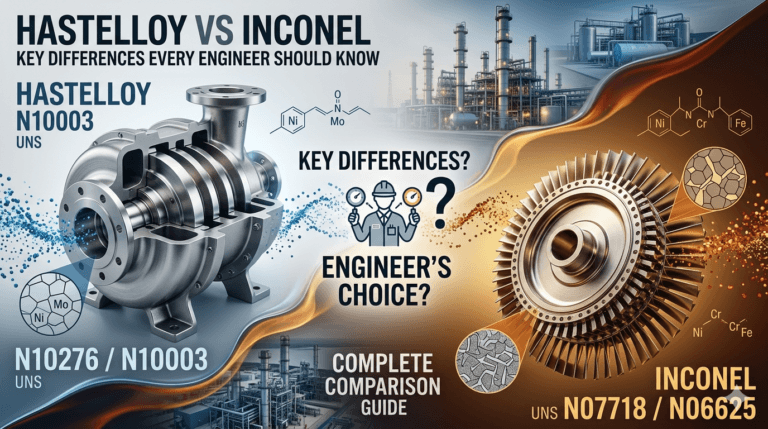
- C-276 is the most versatile but not the best in every environment; C-22 excels in oxidizing conditions, B-3 dominates in HCl
- Monel 400 is undervalued for reducing acid environments — its copper content provides performance C-276 cannot match
- Always specify low-carbon grades for welded components in corrosive service to prevent HAZ sensitization
- Verify regulatory approval (NACE MR0175/ISO 15156) for sour gas and other regulated applications before finalizing material selection
For alloy selection guidance for your specific application, see our Ultimate Nickel Alloy Selection Guide. For welding considerations that affect corrosion resistance, see our Nickel Alloy Welding Guide.