Nickel alloys are among the most challenging metals to weld. Unlike carbon steel, where a competent welder can produce sound joints with relative ease, nickel alloys demand precise process control, meticulous preparation, and a thorough understanding of metallurgical behavior. A single parameter deviation — wrong gas flow rate, contaminated surface, or excessive heat input — can cause defects that are invisible to the naked eye but catastrophic in service.
This guide covers the practical challenges you will encounter welding nickel alloys, explains why they occur, and provides actionable solutions. Whether you are working with Hastelloy, Inconel, Incoloy, or Monel, these principles apply.
Quick Resource: If you are also selecting which alloy to use for your application, see our Ultimate Nickel Alloy Selection Guide for a comprehensive comparison. For UNS numbers and specifications referenced throughout this article, see our Understanding UNS Numbers guide.
Why Nickel Alloys Are Difficult to Weld
Three metallurgical characteristics make nickel alloys fundamentally different from carbon steel:
- High coefficient of thermal expansion — Nickel expands about 30% more than steel during heating. This creates high residual stresses during cooling, increasing susceptibility to cracking.
- Low thermal conductivity — Heat dissipates slowly in nickel alloys. This means the heat that would spread across a wide zone in steel stays concentrated in a narrow area with nickel, leading to steep temperature gradients and localized overheating.
- High surface activity — Molten nickel alloys have high surface tension and viscosity compared to steel. This makes the weld pool less fluid, producing poor wetting action on the base metal edges. The weld bead tends to “sit on top” rather than flowing into the joint — the single most common complaint from steel welders transitioning to nickel alloys.
These three factors combine to make nickel alloys prone to specific defect modes that require specific countermeasures, covered in detail below.
1. The Three Major Welding Defects in Nickel Alloys
1.1 Hot Cracking (Solidification and Liquation Cracking)
What it is: Hot cracking occurs along the weld metal’s grain boundaries during solidification (solidification cracking) or in the heat-affected zone (HAZ) during heating (liquation cracking). Nickel alloys are particularly sensitive because low-melting-point impurities like sulfur (S), phosphorus (P), lead (Pb), and bismuth (Bi) segregate to grain boundaries during solidification, weakening those boundaries under shrinkage stress.
Why it happens in nickel alloys specifically:
- Nickel is an excellent scavenger for sulfur — it picks up S from furnace atmosphere, cutting tools, and even electrode holders
- The high thermal expansion coefficient means greater shrinkage stress on cooling
- Grain boundary wetting by low-melting phases is more severe in nickel than in steel
How to prevent it:
| Action | Details |
|---|---|
| Control impurity levels | Specify S < 0.003% and P < 0.005% in the base metal where possible. Check material test reports (MTRs) |
| Use the correct filler metal | ERNiCrMo-3 (for Inconel 625) and ERNiCrMo-4 (for Hastelloy C-276) have compositions designed to counteract impurity effects |
| Reduce restraint | Design joints with adequate flexibility. Avoid rigid fixturing that compounds shrinkage stress |
| Control heat input | Use lower heat input per pass. Multi-pass welding with controlled interpass temperature reduces overall stress |
| Preheat only when necessary | Preheating is generally NOT recommended for nickel alloys — it increases total heat input and widens the HAZ |
1.2 Porosity
What it is: Small gas pockets trapped within the weld metal during solidification. While some porosity is tolerable, clustered or linear porosity is unacceptable in pressure-containing or corrosion-critical applications.
Why it happens:
- Nickel alloys are far more sensitive to porosity than carbon steel because hydrogen and nitrogen solubility drops sharply as the weld pool solidifies
- Any contamination on the base metal or filler wire — oil, grease, cutting fluid, shop dust, moisture, paint, or even fingerprint residue — decomposes in the arc and releases gas into the pool
- Inadequate shielding gas coverage allows atmospheric nitrogen to enter the pool
How to prevent it:
| Action | Details |
|---|---|
| Eliminate all organic contaminants | Solvent-clean all surfaces (acetone or methanol) within 12 hours of welding. Never use chlorinated solvents that leave residue |
| Dry filler metals | Store filler wires in sealed containers with desiccant. Bake at 150-200°C if moisture exposure is suspected |
| Ensure adequate shielding gas coverage | Use pure argon (99.99%) or argon-helium mixtures. Increase flow rate if there is any cross-draft. Consider a trailing gas cup for GTAW |
| Use proper technique | Maintain a tight arc length in GTAW. In GMAW, use short-circuit or pulsed spray rather than globular transfer, which creates spatter and turbulence |
| Add trailing gas protection | For Hastelloy and Inconel welds in critical service, use a trailing gas cup to protect the weld until it drops below 500°C |
1.3 Lack of Fusion
What it is: The weld metal fails to fuse completely with the base metal or with a previous weld pass. This creates a planar defect — a crack-like void along the joint interface.
Why it happens:
- Nickel alloys’ sluggish weld pool does not flow and “find” unfused surfaces the way steel does
- The high viscosity of molten nickel means the weld pool stays where it is deposited, requiring the welder to deliberately direct it to the joint edges
- Nickel alloys have a higher melting point than steel (1455°C for pure Ni vs. 1538°C sounds counterintuitive, but the key issue is the pool’s lack of fluidity)
- Higher chromium or molybdenum content raises the pool’s surface tension further
How to prevent it:
| Action | Details |
|---|---|
| Use proper joint preparation | Ensure the bevel angle is adequate (60-70° included angle for groove welds, not the 60° acceptable for steel). Narrow root faces and small root openings compound the problem |
| Direct the arc to the base metal | Angle the torch so the arc directly impinges on the base metal edge, not just the filler rod. The pool should visibly flow toward and wet the joint walls |
| Use lower current than on steel | Nickel alloys require less current than steel of equivalent thickness. Start at 80-85% of your steel settings and adjust up |
| Reduce travel speed | Nickel pool flows slowly. Move slower than you would on steel — this allows the pool to flow and wet the joint properly |
| Employ proper joint cleaning between passes | Remove all slag, oxide discoloration, and spatter before each pass. Nickel forms a tenacious oxide film that prevents fusion if not removed |
2. Four Welding Processes for Nickel Alloys
2.1 GTAW (Gas Tungsten Arc Welding / TIG)
GTAW is the gold standard for nickel alloy welding when quality is the priority. It produces the cleanest, most precise welds with no spatter or slag to manage.
| Aspect | Recommendation |
|---|---|
| Electrode | EWCe-2 (ceriated tungsten), ground to a sharp point for steel and a rounded point for aluminum |
| Polarity | DCEN (direct current, electrode negative) — 70% of arc heat concentrates on the workpiece, giving deep penetration and protecting the tungsten |
| Shielding gas | Pure argon (99.99%) for most applications. Ar + 15-30% He improves wetting and penetration for thicker sections |
| Current range | 80-200A typically; use the lower end of your experience range for nickel |
| Filler metal | Add filler in a forehand technique, maintaining a 15-20° angle between the filler rod and the tungsten |
| Key advantage | Excellent arc stability, precise heat control, no spatter, no slag, visually clean welds |
| Key limitation | Slow deposition rate; operator skill-intensive; not practical for thick sections >12mm in production |
2.2 GMAW (Gas Metal Arc Welding / MIG)
GMAW offers significantly higher deposition rates than GTAW, making it practical for production welding of thicker sections.
| Aspect | Recommendation |
|---|---|
| Transfer mode | Pulsed spray transfer preferred — lower heat input with good penetration, minimal spatter |
| Shielding gas | Ar + 5-10% He + 1-2% CO₂ or Ar + 30-50% He for deeper penetration |
| Current | DCEP (direct current, electrode positive) — 70% of heat is in the electrode, melting filler metal efficiently |
| Wire feed speed | Start lower than for steel; adjust to achieve a smooth, stable arc without spatter |
| Key advantage | 3-5× faster deposition than GTAW; easier automation |
| Key limitation | More spatter than GTAW; porosity sensitivity is higher; requires tighter process control |
2.3 SMAW (Shielded Metal Arc Welding / Stick)
SMAW is the most portable process, requiring only a power source and electrodes. It has a role in field welding and repair work, but is the most difficult process for achieving quality welds in nickel alloys.
| Aspect | Recommendation |
|---|---|
| Electrode type | ENiCrMo-3 (for Inconel/Hastelloy base metals) or ENiCu-7 (for Monel) |
| Electrode storage | Follow manufacturer instructions — typically 150°C minimum bake if exposed to moisture. Moisture causes porosity |
| Polarity | DCEP |
| Key advantage | Portable, simple equipment, good for field repairs and hard-to-reach positions |
| Key limitation | Highest risk of porosity; slag management critical; operator-dependent; not recommended for critical welds |
2.4 PAW (Plasma Arc Welding)
PAW produces deep, narrow welds with excellent gap tolerance. It is gaining adoption in precision aerospace and pharmaceutical tube welding.
| Aspect | Recommendation |
|---|---|
| Key advantage | Keyhole capability allows welding without filler metal in some configurations; excellent for thin-walled tubing |
| Shielding gas | Argon with a small amount of hydrogen (up to 2%) for argon-shielded plasma; separate shielding and purging gases |
| Key limitation | Requires precise equipment and operator skill; not widely available |
3. Filler Metal Selection Guide
Filler metal selection is one of the most consequential decisions in nickel alloy welding. Using the wrong filler — or no filler — significantly affects the weld deposit’s corrosion resistance, mechanical properties, and cracking susceptibility.
3.1 Common Filler Metals and Their Applications
| Filler Metal (AWS A5.14) | UNS | Best For | Key Properties |
|---|---|---|---|
| ERNiCr-3 | N0603 | Inconel 600, 601; dissimilar welds between nickel alloys and stainless steel | Most widely used nickel filler; excellent oxidation resistance |
| ERNiCrMo-3 | N06625 | Inconel 625 (matching filler); overlays on carbon steel | Highest strength; excellent corrosion resistance; best-seller for chemical processing |
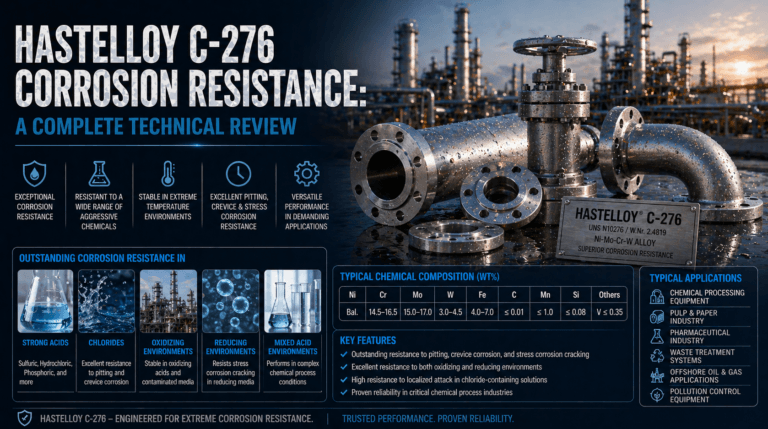
| ERNiCrMo-4 | N10276 | Hastelloy C-276 (matching filler) | Excellent for oxidizing and reducing environments |
| ERNiCrMo-14 | N06686 | Hastelloy C-22, C-276 welds | Better oxidation resistance than ERNiCrMo-4; preferred for high-temperature applications |
| ERNiCu-7 | N04060 | Monel 400, Monel K-500 | Excellent seawater resistance; do NOT use for welding to carbon steel with SS electrodes |
| ERNi-1 | N02061 | Pure Nickel 200/201 | Joining pure nickel; buttering carbon steel before welding with nickel filler |
| ERNiCrCoMo-1 | N06617 | Inconel 617; high-temperature service up to 1100°C | Outstanding oxidation resistance at elevated temperatures |
3.2 The “Matching vs. Overmatching” Rule
- Matching filler (same composition as base metal) is preferred for most applications — the weld deposit matches the base metal’s corrosion resistance and mechanical properties
- Overmatching filler (higher alloy content) is sometimes used to compensate for dilution when welding dissimilar metals or when the base metal’s composition is depleted in a particular element
- Undermatching filler (lower alloy content) is occasionally acceptable in non-critical applications to improve weldability, but never in corrosion-critical or high-temperature service
Example: When welding Inconel 625 overlay onto carbon steel (to provide corrosion-resistant cladding), use ERNiCrMo-3 — the dilution from the carbon steel lowers the weld deposit’s nickel and molybdenum content, so you start with excess to end up in spec.
4. Pre-Weld Preparation: The Foundation of Quality
More nickel alloy welding failures originate from inadequate pre-weld preparation than from any other cause. The preparation requirements are significantly more stringent than for carbon steel.
4.1 Surface Cleaning
Every contaminant must be removed before welding:
- Organic contaminants — Degrease with acetone or methyl ethyl ketone (MEK). Never use chlorinated solvents that leave residue
- Metallic coatings — Remove any plating, cadmium coating, or zinc coating within 25mm of the joint
- Oxide films — Grind or stainless steel wire-brush the joint area. Use a dedicated SS wire brush — using a brush previously used on carbon steel introduces iron particles that cause localized corrosion in nickel alloys
- Surface markings — Remove all paint, chalk, crayon, and ink markings within 50mm of the joint. These contain carbon that causes porosity
Important: If the material has been annealed in a reducing atmosphere (hydrogen furnace), inspect for sulfur pickup from furnace atmosphere. Request material test reports confirming sulfur content.
4.2 Joint Design
Nickel alloys require more generous joint geometry than carbon steel:
| Parameter | Carbon Steel | Nickel Alloy |
|---|---|---|
| Root face (land) | 1-2mm | 0-1mm (no land preferred) |
| Included angle (V-groove) | 60° | 60-75° |
| Root opening | 0-2mm | 1-3mm |
| Backing gas | Optional | Strongly recommended |
The absence of a land (zero root face) and wider root opening give the welder better visibility of the root and ensure complete fusion at the critical root pass.
4.3 Fit-Up and Alignment
- Maximum allowable misalignment: 1.5mm for wall thicknesses < 6mm; 3mm for heavier wall
- Nickel alloys cannot tolerate large gaps — a gap wider than 3mm requires backing strips or requires a backing pass, increasing cost and complexity
- Tack welds should be made with the same filler metal as the root pass and pre-cleaned to the same standard as the joint itself
5. Post-Weld Treatment
5.1 Post-Weld Heat Treatment (PWHT)
Unlike carbon steel, most nickel alloys do NOT require PWHT after welding:
| Alloy Family | PWHT Required? | Typical Treatment (if needed) |
|---|---|---|
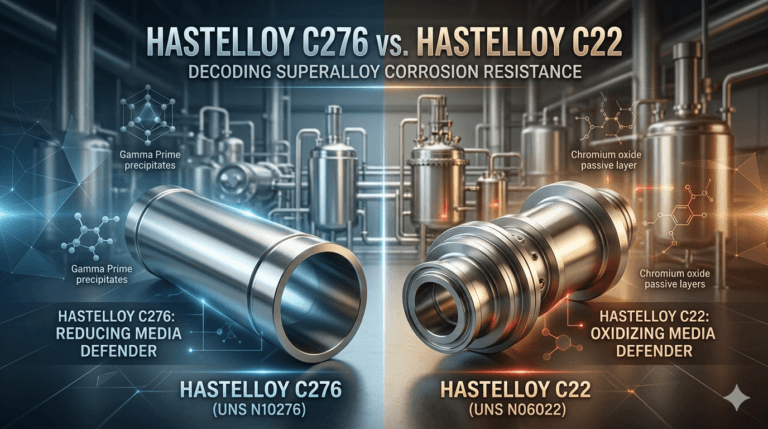
| Hastelloy C-276 / C-22 | No | Not recommended; may degrade corrosion resistance |
| Inconel 625 | No | Not typically required |
| Inconel 718 | Optional | Full solution treatment + aging if peak mechanical properties are needed |
| Inconel 600 | No | Not typically required |
| Incoloy 800H/800HT | No | Not typically required |
| Monel 400 | No | Not typically required |
| Pure Nickel 200 | No | Not typically required |
The one critical exception: If the weld zone shows signs of sensitization (IGA/IGC attack is a risk), a full solution anneal at the alloy’s recommended temperature followed by rapid cooling may be needed. This must be specified by the design engineer and is rare for most applications.
5.2 Post-Weld Cleaning
Immediately after welding, remove:
- All oxidation discoloration — Use a dedicated stainless steel wire brush. Discoloration indicates chromium depletion at the grain boundaries
- Any embedded iron particles — Iron contamination causes pitting corrosion in service. If iron contamination is suspected, pickle with a 10-15% nitric acid + 1-2% hydrofluoric acid solution, then rinse thoroughly
- Slag and spatter — Use non-ferrous tools; never use carbon steel slag hammers
6. Weldability Comparison Across Nickel Alloy Families
Not all nickel alloys weld equally easily. Here is a practical comparison:
| Alloy | Weldability | Most Common Process | Notes |
|---|---|---|---|
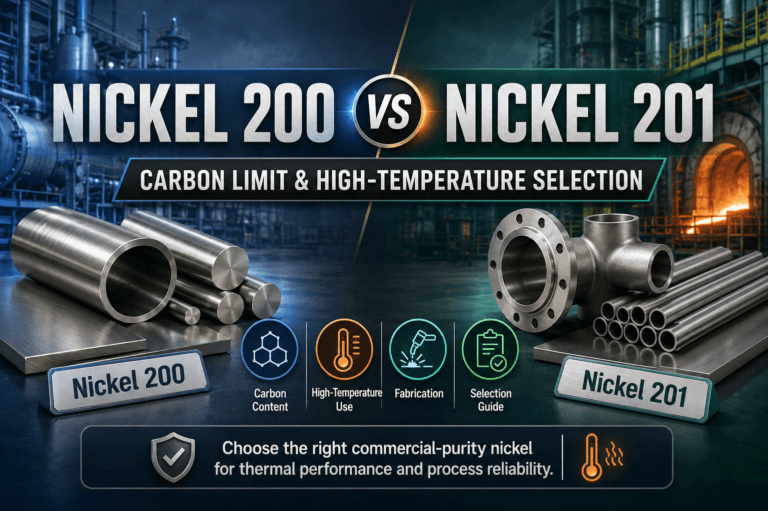
| Pure Nickel (200/201) | Good | GTAW, GMAW | Best weldability of all nickel alloys; low hot-crack sensitivity |
| Inconel 600 | Good | GTAW, GMAW | Well-established process parameters; ERNiCr-3 filler |
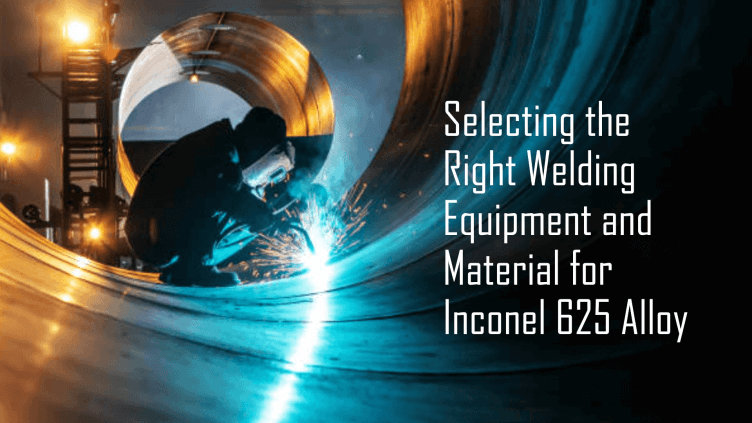
| Inconel 625 | Good | GTAW, GMAW | Excellent weldability; ERNiCrMo-3 matching filler; widely used |
| Inconel 718 | Moderate | GTAW, GMAW | Heat input sensitive; tight parameter control required; age after welding to restore strength |
| Hastelloy C-276 | Good | GTAW, GMAW | ERNiCrMo-4 or ERNiCrMo-14 filler; susceptible to elemental segregation in multi-pass welds |
| Hastelloy C-22 | Good | GTAW, GMAW | Better weldability than C-276; ERNiCrMo-14 preferred |
| Hastelloy X | Good | GTAW, GMAW | Excellent weldability; widely used in aerospace combustion hardware |
| Incoloy 800H/800HT | Good | GTAW, GMAW | Similar to stainless steel; ERNiCr-3 or ERNiCrFe-2 filler |
| Monel 400 | Good | GTAW, GMAW | ERNiCu-7 filler; avoid high heat input that promotes porosity |
Note: Incoloy and Inconel are registered trademarks of Special Metals Corporation and Huntington Alloys Corporation, respectively. Hastelloy is a registered trademark of Haynes International. Always use UNS numbers to specify alloys precisely.
7. Five Common Nickel Alloy Welding Mistakes
Mistake 1: Treating Nickel Like Stainless Steel
A welder experienced with 304 stainless steel will instinctively use similar parameters and technique for Inconel — and encounter problems. The molten pool does not flow the same way. The arc characteristics are different. The electrode angles and travel speeds must be adjusted.
Correct approach: Treat nickel alloys as a distinct material family. Start at 80-85% of your stainless steel settings and adjust based on pool behavior.
Mistake 2: Using a Contaminated Wire Brush
Using a wire brush previously used on carbon steel introduces iron particles into the nickel alloy weld zone. These iron inclusions create localized galvanic cells that initiate pitting corrosion — sometimes within months in service.
Correct approach: Maintain separate stainless steel wire brushes exclusively for nickel alloys. Mark them clearly.
Mistake 3: Neglecting Interpass Cleaning
Nickel alloys form a thin but tenacious chromium oxide layer between passes. This layer has a much higher melting point than the base metal. If it is not removed before the next pass, it acts as a barrier — preventing fusion and creating linear lack-of-fusion defects that are difficult to detect with MT or PT but appear as bright lines under etching.
Correct approach: Wire brush every pass with clean stainless brushes before laying the next bead. Inspect the brushed surface — it should be bright metallic, not gray or blue.
Mistake 4: Applying Too Much Heat Input
High heat input coarsens the weld metal’s grain structure, increases the HAZ width, and raises residual stress levels. For corrosion-resistant alloys, this means the weld zone loses corrosion resistance.
Correct approach: Use lower heat input per pass. Make more passes at lower current. Control interpass temperature below 150°C. This is the single most impactful change a shop can make to improve nickel alloy weld quality.
Mistake 5: Not Verifying Filler Metal Identity
Filler wire is the most commonly misidentified material in a fabrication shop. Using ERNiCrMo-3 instead of ERNiCrMo-4 (or vice versa) may not be visible in the as-welded condition but creates significant differences in corrosion resistance and mechanical properties in service.
Correct approach: PMI-test filler wire before use with a handheld XRF analyzer. Never trust labels alone. See our Material Inspection Guide for detailed PMI procedures.
8. Quick Reference: Welding Parameters by Thickness
Thin Material (1-3mm wall)
| Process | Current | Electrode/Gas | Filler Diameter |
|---|---|---|---|
| GTAW | 60-100A DCEN | Ar 99.99%, 8-12 L/min | 1.0-1.6mm |
| PAW (keyhole) | 50-80A | Ar + 2% H₂, plasma Ar 3 L/min | None (autogenous) |
Medium Material (3-12mm wall)
| Process | Current | Electrode/Gas | Filler Diameter |
|---|---|---|---|
| GTAW | 100-180A DCEN | Ar + 15-25% He, 12-18 L/min | 1.6-2.4mm |
| GMAW (pulse) | 120-200A DCEP | Ar + 2% CO₂, 15-20 L/min | 0.9-1.2mm |
Heavy Material (>12mm)
| Process | Current | Electrode/Gas | Filler Diameter |
|---|---|---|---|
| GMAW (pulse) | 180-300A DCEP | Ar + 30% He, 20-25 L/min | 1.2-1.6mm |
| SAW | 250-450A AC/DC | Flux: neutral or slightly oxidative | 2.4-3.2mm |
Key Takeaways
- Nickel alloys are weldable — not difficult if you respect their metallurgical behavior rather than treating them as “stainless on steroids”
- Cleanliness is non-negotiable — contamination is the #1 cause of nickel alloy weld defects
- Lower heat input is better — multi-pass welding at controlled parameters produces higher quality than single-pass high-heat welding
- Use the correct filler metal — matching filler for matching corrosion resistance; always verify with PMI before welding
- Do not over-engineer the PWHT — most nickel alloys do not need post-weld heat treatment; over-processing causes more harm than good
For alloy selection questions before welding, see our Ultimate Nickel Alloy Selection Guide. For specifications and UNS numbers, see our Understanding UNS Numbers guide.