Does Nickel Rust?
Strictly speaking, nickel does not rust because rust refers to iron oxide formed when iron or steel reacts with oxygen and moisture. Nickel contains no iron as the main element, so pure nickel does not form red-brown rust like carbon steel.
That does not mean nickel is immune to corrosion. Nickel can form oxide films, discolor, tarnish or corrode in aggressive environments. The correct term depends on the environment and the visible surface change.
Nickel Rust vs Oxidation vs Corrosion
| Term | Meaning | Nickel Behavior |
|---|---|---|
| Rust | Iron oxide formed on iron or steel. | Pure nickel does not rust like iron because it is not iron-based. |
| Oxidation | Reaction with oxygen, often at elevated temperature. | Nickel can form nickel oxide films and surface discoloration. |
| Tarnish | Surface dulling or discoloration. | Nickel may tarnish in sulfur-containing or atmospheric conditions. |
| Corrosion | Material degradation caused by chemical or electrochemical reaction. | Nickel can corrode in certain acids, chlorides or contaminated environments. |
Nickel 200 vs Nickel 201 Corrosion Selection
Nickel 200 and Nickel 201 are commercially pure nickel grades. Nickel 200 is commonly used below about 315°C, while Nickel 201 has lower carbon and is preferred for higher-temperature service where graphitization risk matters.
| Grade | Best Starting Use | Notes |
|---|---|---|
| Nickel 200 | Caustic alkali, chemical processing, electrical and reducing environments below about 315°C. | Commonly supplied as plate, bar, pipe, sheet and custom processed forms. |
| Nickel 201 | Higher-temperature caustic service and low-carbon pure nickel applications. | Lower carbon helps reduce graphitization concerns at elevated temperature. |
When Nickel May Still Corrode
- Strong oxidizing acids or contaminated acid solutions
- Chloride-rich environments where crevice or localized corrosion can occur
- Sulfur-containing atmospheres that may cause tarnish or surface attack
- High-temperature oxidation where oxide scale or discoloration can form
- Galvanic contact with dissimilar metals in conductive solutions
Nickel vs Stainless Steel vs Monel
If the question is whether nickel will rust outdoors, the practical answer depends on whether the material is pure nickel, nickel-plated steel, stainless steel or a nickel alloy such as Monel 400. Nickel-plated steel can rust if the plating is damaged and the steel substrate is exposed.
| Material | Rust / Corrosion Behavior | Related Page |
|---|---|---|
| Nickel 200 / 201 | Does not rust like iron; selected for caustic and selected chemical environments. | Nickel 200 / Nickel 201 |
| Monel 400 | Nickel-copper alloy for seawater, brine and hydrofluoric acid service. | Monel 400 |
| Stainless steel | Can pit or stain in chloride environments; alloy grade matters. | Super stainless steel hub |
| Nickel-plated steel | Can rust if coating is damaged and steel is exposed. | Confirm base metal and coating thickness. |
FAQ
Does pure nickel rust?
No. Pure nickel does not rust like iron or carbon steel because rust is iron oxide. Nickel can still oxidize, tarnish or corrode in certain environments.
Can nickel corrode in seawater?
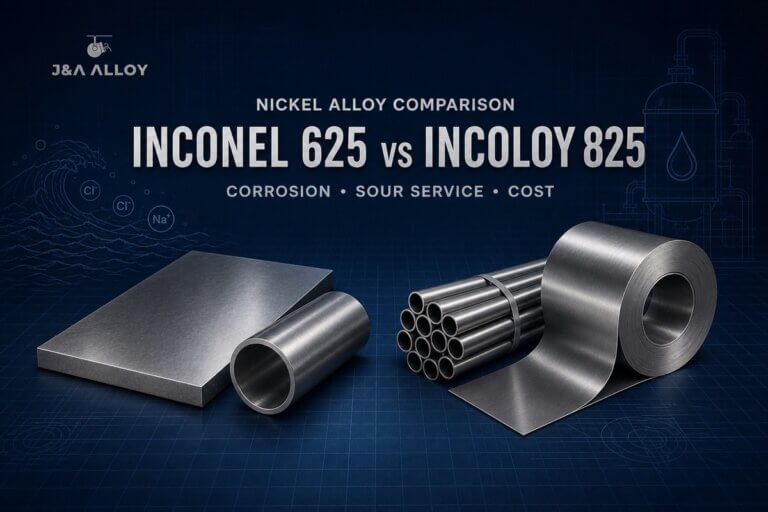
Nickel and nickel alloys behave differently in seawater. For marine service, Monel 400, Inconel 625, duplex 2205, super duplex 2507 or 254SMO may be more suitable depending on the application.
What is the difference between Nickel 200 and Nickel 201?
Nickel 201 is the low-carbon version of commercially pure nickel and is preferred for higher-temperature service, while Nickel 200 is widely used below about 315°C.
Request Nickel Material Selection Support
Send us the medium, concentration, temperature, pressure, product form, size, quantity and inspection requirements. J&A Alloy can help compare Nickel 200, Nickel 201, Monel 400, Inconel 625 and other corrosion resistant alloys.